Aug 6, 2026
The Ultimate Guide to Selecting Industrial Food Processing Blades
The Ultimate Guide to Selecting Industrial Food Processing Blades
The Ultimate Guide to Selecting Industrial Food Processing Blades
In the industrial food processing sector, a blade is more than just a cutting tool—it is a critical component that directly impacts product yield, food safety, and operational ROI. Selecting the wrong blade can lead to increased waste, frequent downtime, and even safety risks.
At Zhu Global, we understand that every production line has unique demands. This guide outlines the five essential factors to consider when choosing industrial blades to ensure peak performance and long-term reliability.
- Define Your Specific Application Requirements The first step is to match the blade to the specific task. Food processing is diverse, and a "one-size-fits-all" approach rarely works. Meat, Poultry & Seafood: Requires high-precision edges to maintain muscle fiber integrity and minimize "smearing." Vegetables & Fruits: Needs blades that can handle high acidity and provide clean cuts to extend shelf life. Bakery & Confectionery: Often requires non-stick coatings or specific serrations to handle soft or sticky textures. Packaging & Portioning: Focuses on high-speed repeatability and clean separation of films or trays. Pro Tip: Consider the temperature of the product (frozen vs. fresh), as this significantly influences the required blade toughness and edge geometry.
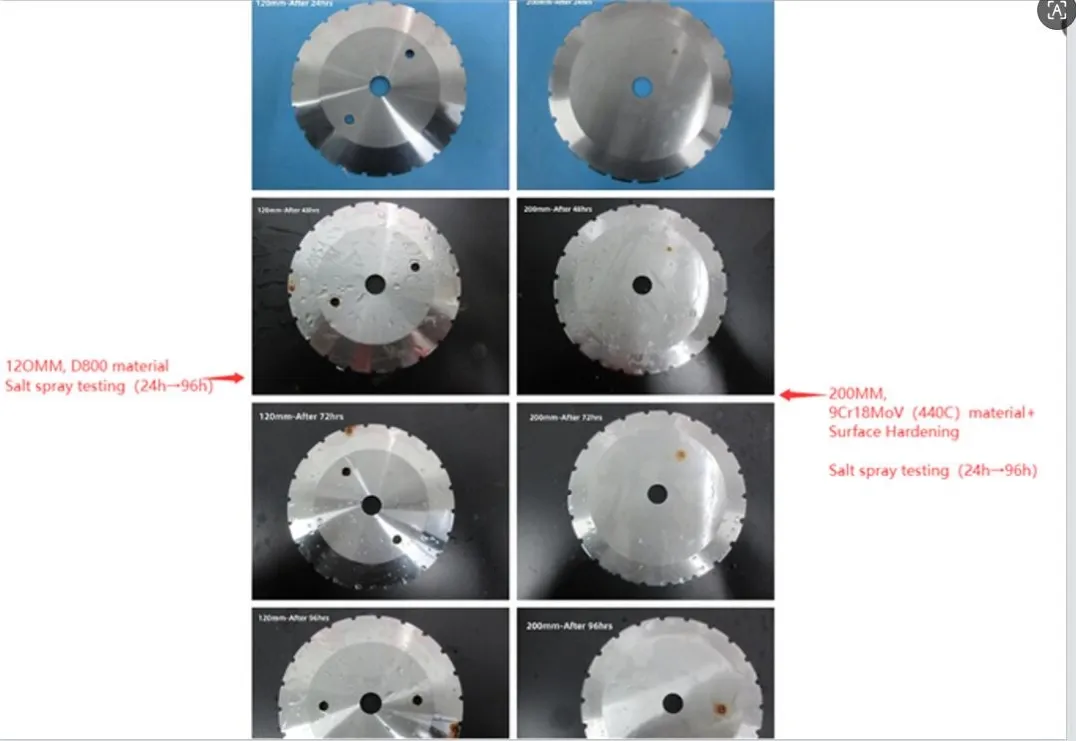
- Select the Right Food-Grade Materials Material science is the backbone of a high-performance blade. At Zhu Global, we prioritize materials that balance corrosion resistance with wear resistance. Stainless Steel (e.g., 420, 440A, 1.4031): The gold standard for hygiene. These grades offer excellent resistance to water and food acids, making them ideal for wet processing environments. High-Performance Tool Steel (e.g., D2, M2): Best for high-volume, dry applications (like packaging or dry snack processing) where edge retention is more critical than corrosion resistance. Specialty Alloys: For extreme environments, we offer advanced alloys that provide superior hardness without sacrificing food safety compliance.
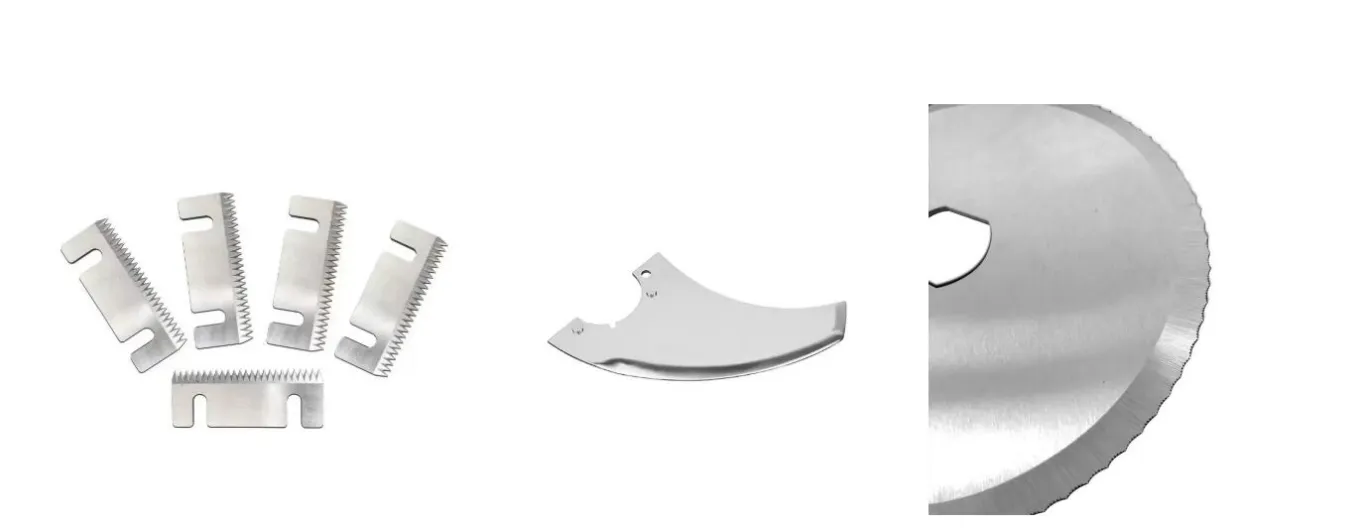
- Optimize Blade Geometry and Edge Design The "geometry" of a blade determines how it interacts with the food. A slight change in angle can result in a significant increase in efficiency. Edge Angle: A sharper (lower) angle provides a cleaner cut but may dull faster. A wider angle offers more durability for tough products. Edge Type: Straight Edges for clean slicing. Serrated Edges for products with tough skins and soft interiors. Scalloped Edges for reducing friction in soft products like bread or cheese. Single vs. Double Bevel: Depending on whether you need a straight vertical cut or a specific directional slice.
-
- Prioritize Hygiene and Surface Finish In a food-safe environment, the blade's surface is just as important as its edge. Surface Roughness (Ra): A finely polished or mirror-finished blade reduces food adhesion (sticking), which minimizes bacterial buildup and makes the cleaning (CIP) process faster and more effective. Compliance: Ensure your blades are manufactured to meet international food safety standards (such as FDA or EC regulations). Precision Grinding: Controlled tolerances ensure that the blade fits perfectly in your machine, preventing vibration that can lead to premature wear or contamination.
- The Power of Customization (The Zhu Global Advantage) Standard off-the-shelf blades often force you to compromise. Custom-engineered blades allow you to optimize your specific production line. By partnering with a specialized manufacturer like Zhu Global, you can customize: Exact Dimensions: Perfect fit for OEM or custom-built machinery. Tailored Coatings: Such as Teflon (PTFE) or Chrome plating to reduce friction and increase life cycles. Batch Consistency: Ensuring that every replacement blade performs exactly like the first. Conclusion: Invest in Quality, Optimize Your Output Choosing the right industrial blade is an investment in your production's future. High-quality blades reduce the Total Cost of Ownership (TCO) by extending service intervals, reducing product waste, and ensuring consistent quality that keeps your customers satisfied. Ready to Upgrade Your Cutting Performance? Zhu Global provides expert technical support and high-precision OEM blade solutions for the global food industry. Whether you need a standard replacement or a custom-designed cutting solution, our team is here to help.