Choosing Saw Blades for Wood and Aluminum: TCT and PCD Options
How to match circular saw blades to solid wood, MDF, chipboard and aluminum profiles - tip material, tooth count, tooth geometry and blade body explained.
Wood and aluminum are processed on the same saws in many workshops, but they behave nothing alike at the cutting edge. Wood is fibrous and comparatively soft; aluminum is gummy, thermally conductive and unforgiving of the wrong tooth geometry. Choosing one blade 'for both' usually costs quality on both.
Here is how to match TCT and PCD circular saw blades to wood materials, and what changes when the material is aluminum.
Start with the material, not the blade
Solid wood, chipboard, MDF and OSB differ in density and abrasiveness, and laminated panels add a brittle face layer. Aluminum profiles and non-ferrous metals add heat and chip welding to the equation. Within one production week a shop may run all of them, which is exactly why blade specification should start from the material list rather than from a single preferred blade.
Cutting solid wood, MDF, chipboard and OSB
For wood materials, TCT blades with fine-grit carbide tips deliver smooth cuts and good service life. Tooth count is the primary control: a moderate tooth count clears chips efficiently in solid wood and rip cuts, while higher tooth counts produce finer finishes in MDF, chipboard and cross cuts where tear-out matters. Hardened and tensioned bodies keep the cut stable at production feed rates, and the tips can be re-sharpened as the edge wears.
Cutting aluminum and non-ferrous profiles
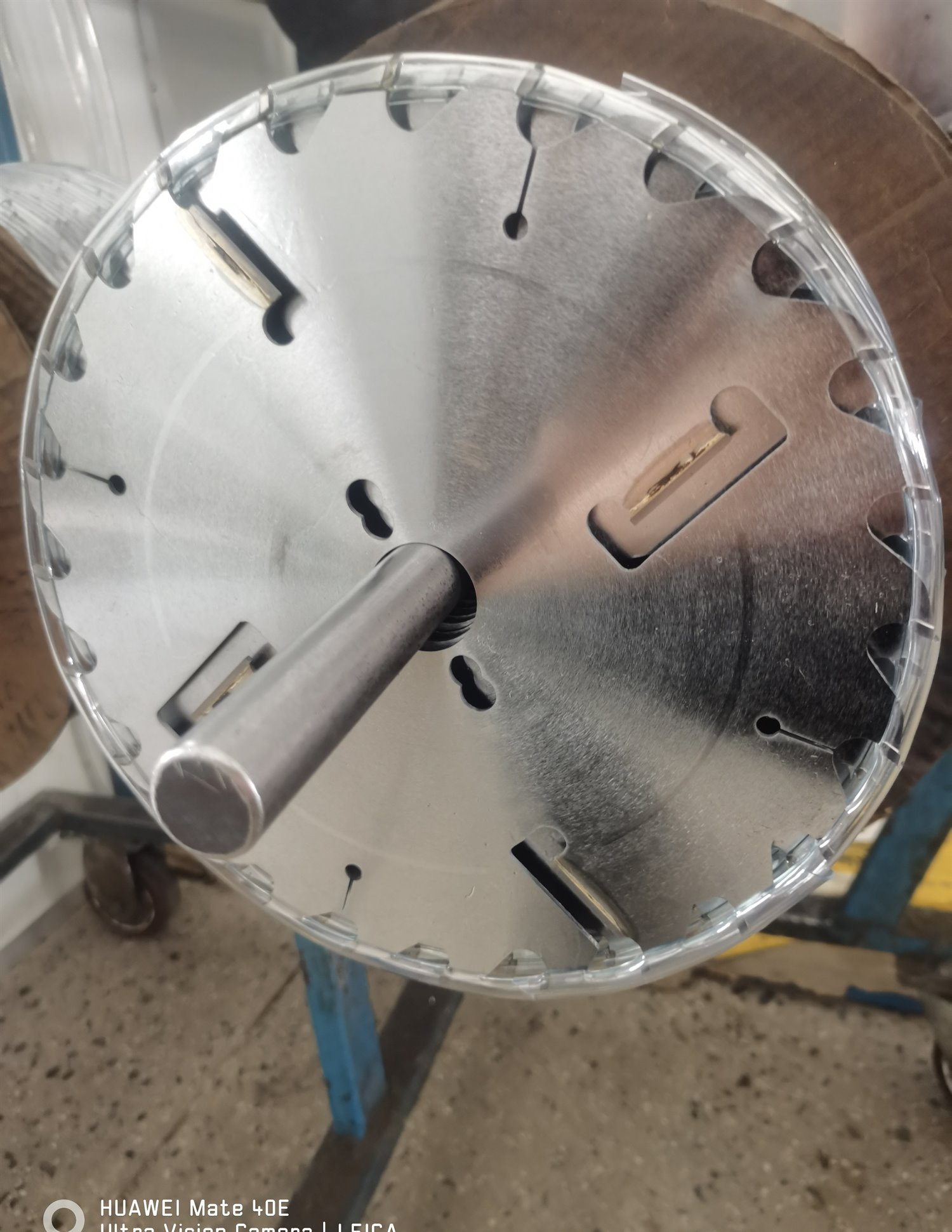
Aluminum cutting changes the rules. The material conducts heat quickly and tends to weld to an overheated tip, and chips are long and abrasive. Blades for aluminum and non-ferrous cutting are built on stiff alloy steel bodies (SKS51-class plate is typical) with TCT tips and tooth geometries designed to shear rather than drag - a high positive hook angle, larger gullets for chip clearance and fewer, stronger teeth than a wood cross-cut blade. Cutting with a light, steady feed and, where the setup allows, a lubricating mist keep the tip cool and the cut clean. Using a wood-cutting blade on aluminum is one of the fastest ways to destroy both the blade and the finish.
PCD options for long production runs
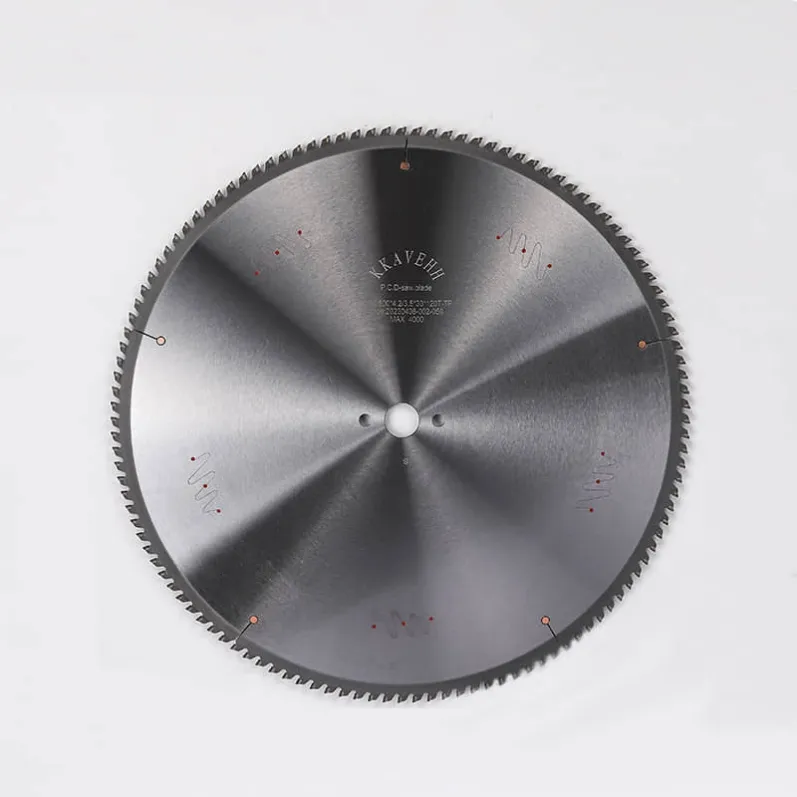
Where aluminum or abrasive composites run in high volumes - extrusion plants and window profile lines, for example - PCD tipped blades hold their edge far longer than carbide and remove blade changes from the maintenance plan. The same logic applies to woodworking lines cutting abrasive boards such as cement particle or fibre-reinforced panels, where PCD pays back quickly.
Blade body and setup
The tip does the cutting; the body keeps it true. A hardened, tensioned body resists deflection and holds flatness at speed, which shows up directly in edge quality and blade life. Machine setup matters as well: tighten flanges properly, keep the arbor clean, and align the fence so the workpiece cannot twist into the blade - most 'blade problems' that reach a supplier's desk start as machine alignment problems.
What to specify when ordering
Send the material list with thicknesses, the machine and running speed, the desired finish, and the bore pattern. Diameters, tooth counts and bores are produced to your machine requirements at ZHONGJIAN TECH, and we will confirm whether TCT or PCD is the better economic choice for your volumes.
Send your material list and machine details to ferrytk898@gmail.com for a blade recommendation and quotation.