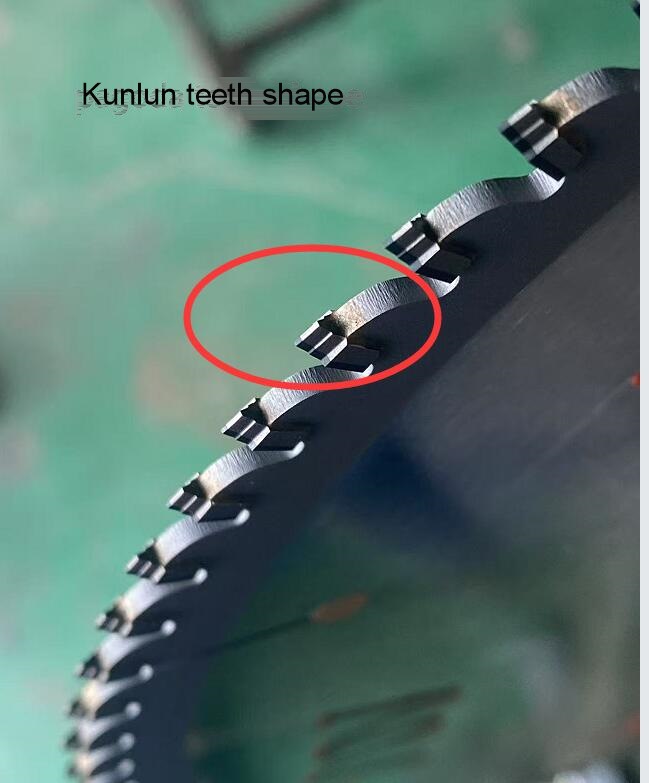
Kunlun Teeth
Kunlun Tooth Blade Sizes: 160, 168, 205, 230 and 250 mm
How to read a designation like 250-3.0/2.0-30-72Z, which diameter fits a track saw, panel saw or sizing line, and how bore and tooth count change the cut.

A blade size designation looks cryptic until you know what each number controls. Read as 250-3.0/2.0-30-72Z it states the diameter, the kerf and plate thickness, the bore and the tooth count - everything the machine needs before it can accept the blade. This guide explains each field, then sets out which Kunlun tooth blade sizes fit track saws, panel saws and sizing lines, and where the conventions stop being reliable. It is written for buyers who have a machine model and a panel mix but no clear idea which diameter, bore or tooth count to order - and for anyone who has already received a blade that did not fit.
Reading the designation field by field
Diameter
The first number is the outside diameter in millimetres. Diameter sets the maximum depth of cut and, at a given spindle speed, the surface speed at the tip. A blade that is larger than the machine's guard allows will not fit, and one that is much smaller than the machine was designed for will run at the wrong surface speed.
Kerf and plate
The pair written as 3.0/2.0 is the kerf and the plate thickness. Kerf is the width of material the blade removes; plate is the thickness of the steel body. The difference between them is the tip protrusion - the part of the tooth that actually does the cutting. A narrow kerf saves material; too narrow a plate, on a machine that vibrates, costs edge quality.
Bore
The bore is the arbor hole diameter. It has to match the machine exactly. This single number is behind most "the blade does not fit" problems, and it is the field buyers most often assume rather than measure.
Tooth count
The number before the Z is the tooth count. More teeth mean a smaller chip per tooth and a finer finish, at the cost of feed rate. Fewer teeth clear material faster and leave a coarser edge. On finished-face panels the tooth count has to be high enough that each tooth takes a thin, controlled chip.
Which diameter fits which machine
160 mm and 168 mm
Track saws and portable machines typically run 160 mm and 168 mm blades with 20 mm bores and 54Z tooth counts. The fine tooth count suits clean edges in melamine, veneer and HPL, which is what these machines are usually asked to cut.
205 mm and 230 mm
Panel saws and vertical panel saws usually run 205 mm and 230 mm blades with 25.4 mm bores and tooth counts between 54Z and 72Z. The choice between them tends to follow the machine's maximum blade size rather than the panel.
250 mm
Multi-blade sizing lines and larger panel saws use 250 mm blades with 30 mm bores and 72Z counts, where the higher tooth count keeps the finish fine at production feed rates.
These are conventions drawn from the machines these blades usually run on, not rules. The machine manual and the arbor decide the diameter and the bore. The panel mix and the edge standard decide the tooth count. When a machine sits between two conventions, the manual wins.
Bore, flange and mounting
Bore diameter is only the beginning of the mounting question. The arbor also has a flange diameter, a clamping face and, on some machines, a pin pattern or a locating shoulder. A blade with the correct bore and the wrong flange geometry will not sit square, and a blade that does not sit square will run out of true no matter how well it is made.
When ordering, send the machine model alongside the bore measurement. A supplier who knows the machine can confirm the flange and clamping arrangement; a supplier working from a bore number alone is guessing, and so is the buyer.
Tooth count, feed rate and finish
Every tooth takes a chip. The size of that chip - the chip load - is set by feed rate, spindle speed and tooth count together. Increase the tooth count without reducing the feed and the teeth stop cutting cleanly and start rubbing; reduce the tooth count without increasing the feed and the edge gets coarser.
This is why a tooth count quoted without the machine's feed rate is only half a specification. On laminated panels, a high tooth count combined with a profile that supports the cut line at entry and exit - which is what the Kunlun teeth shape does - is what produces a clean decorative face without a scoring saw. The tooth count and the profile work together; neither substitutes for the other.
A sizing checklist
1. Machine model and maximum blade diameter. From the manual, not from the blade currently fitted.
2. Bore, flange and clamping arrangement. Measured, or confirmed against the machine documentation.
3. Panel materials and the share of double-sided work. This decides how much the blade has to control both faces.
4. Edge standard. What the next operation needs, described as the defect that is not acceptable rather than as "clean".
5. Feed rate the line actually runs. Production feed, not the maximum in the manual.
6. Tooth count and kerf that follow. Derived last, from the five answers above.
Next step
Send the machine model, the bore and flange arrangement if you know it, the panel materials and the edge standard to ferrytk898@gmail.com, or use the contact form on this site. ZHONGJIAN TECH manufactures PCD and carbide-tipped saw blades with the Kunlun teeth shape, and we will confirm which size and tooth count fits your machine and your panel mix before quoting. If the answer is that your machine needs a different profile, we will say so.