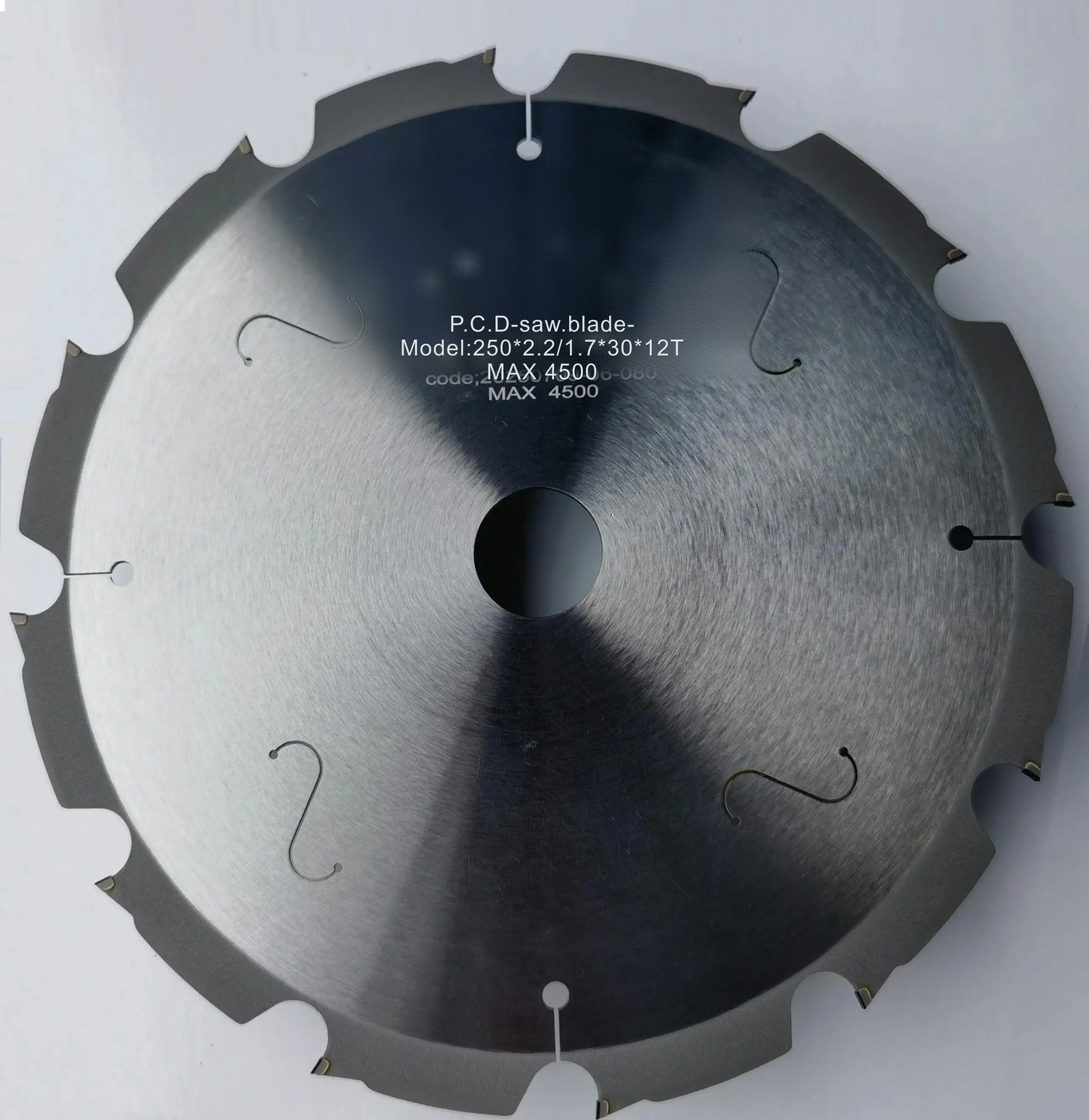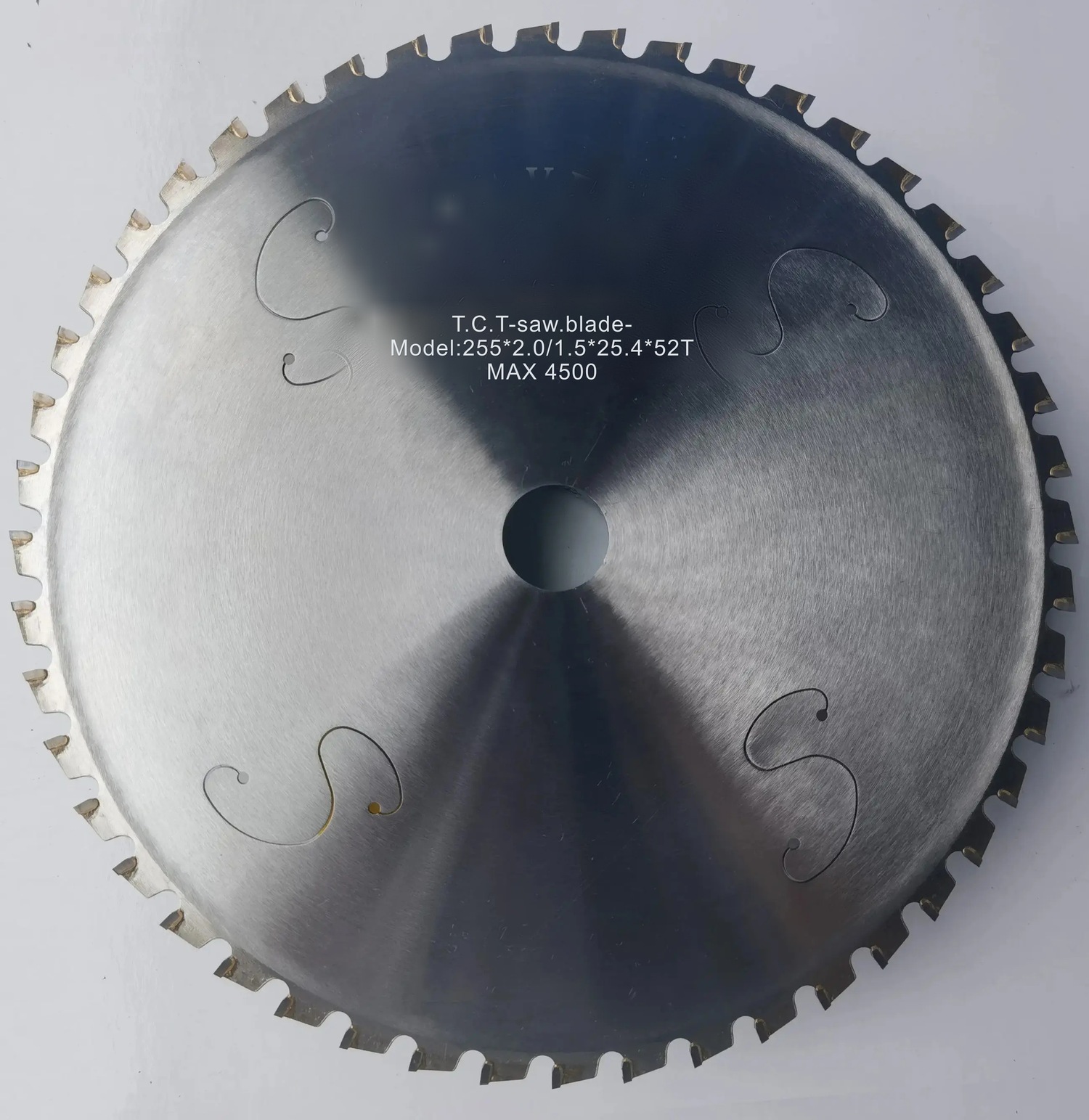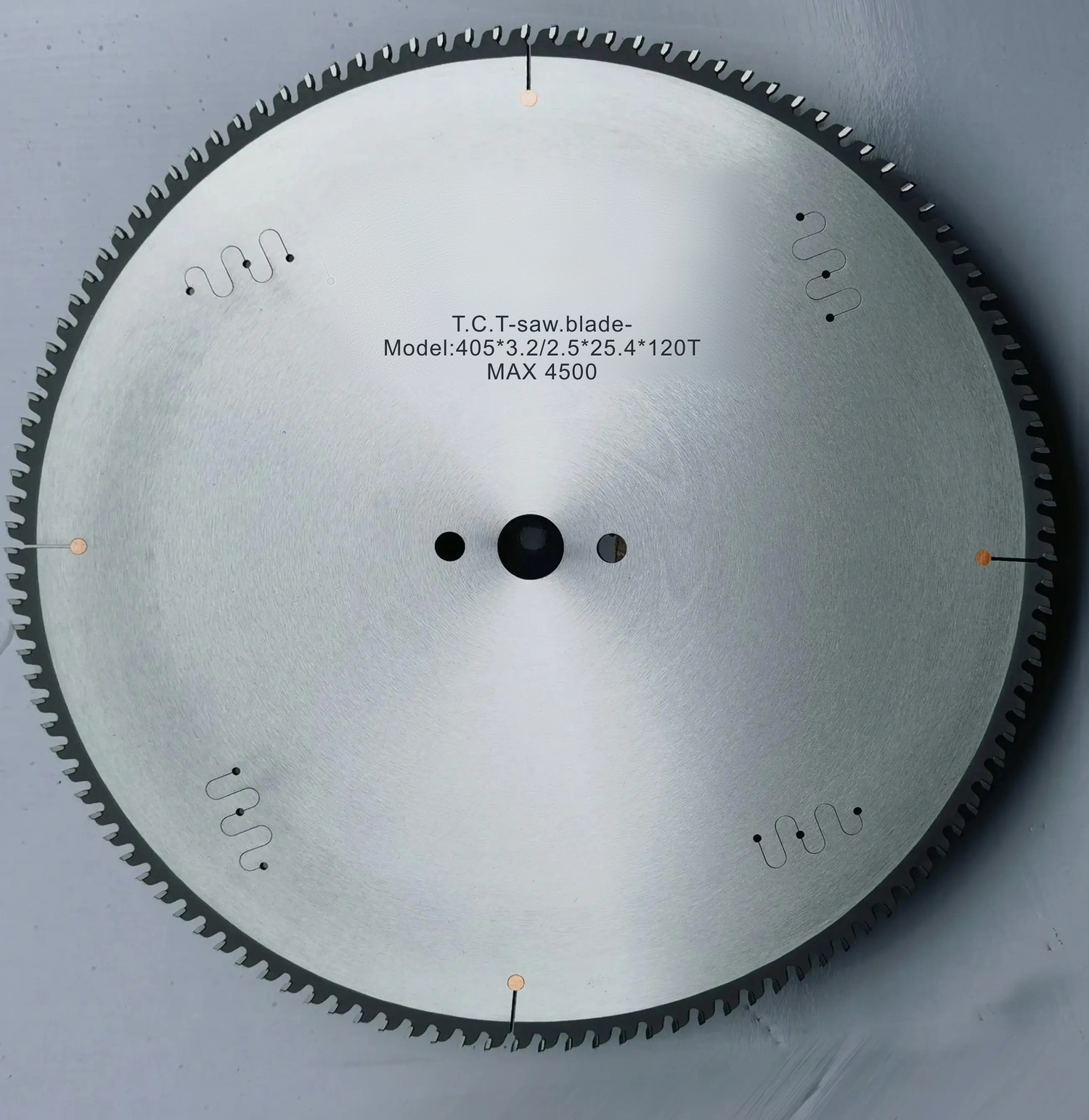
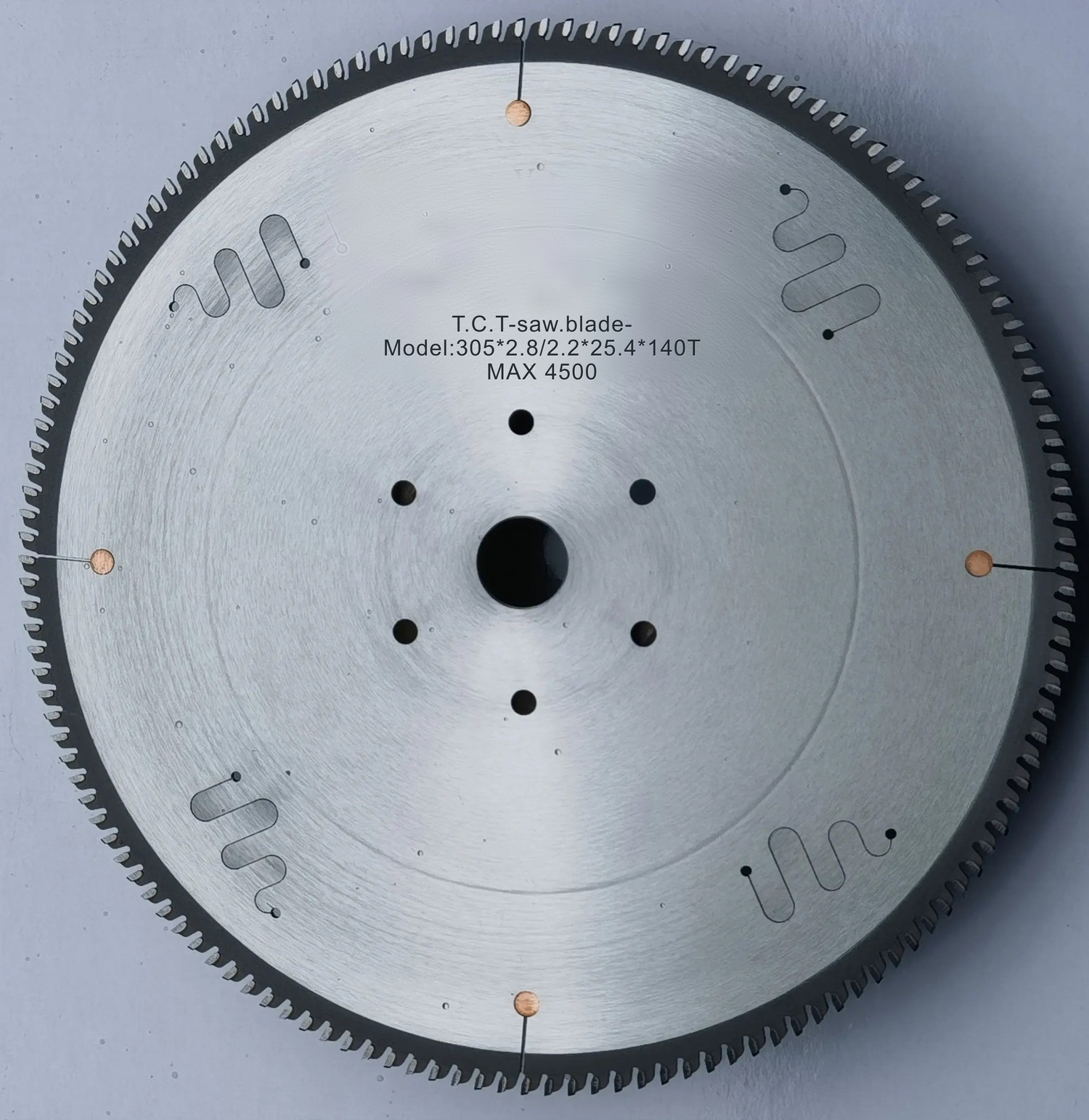
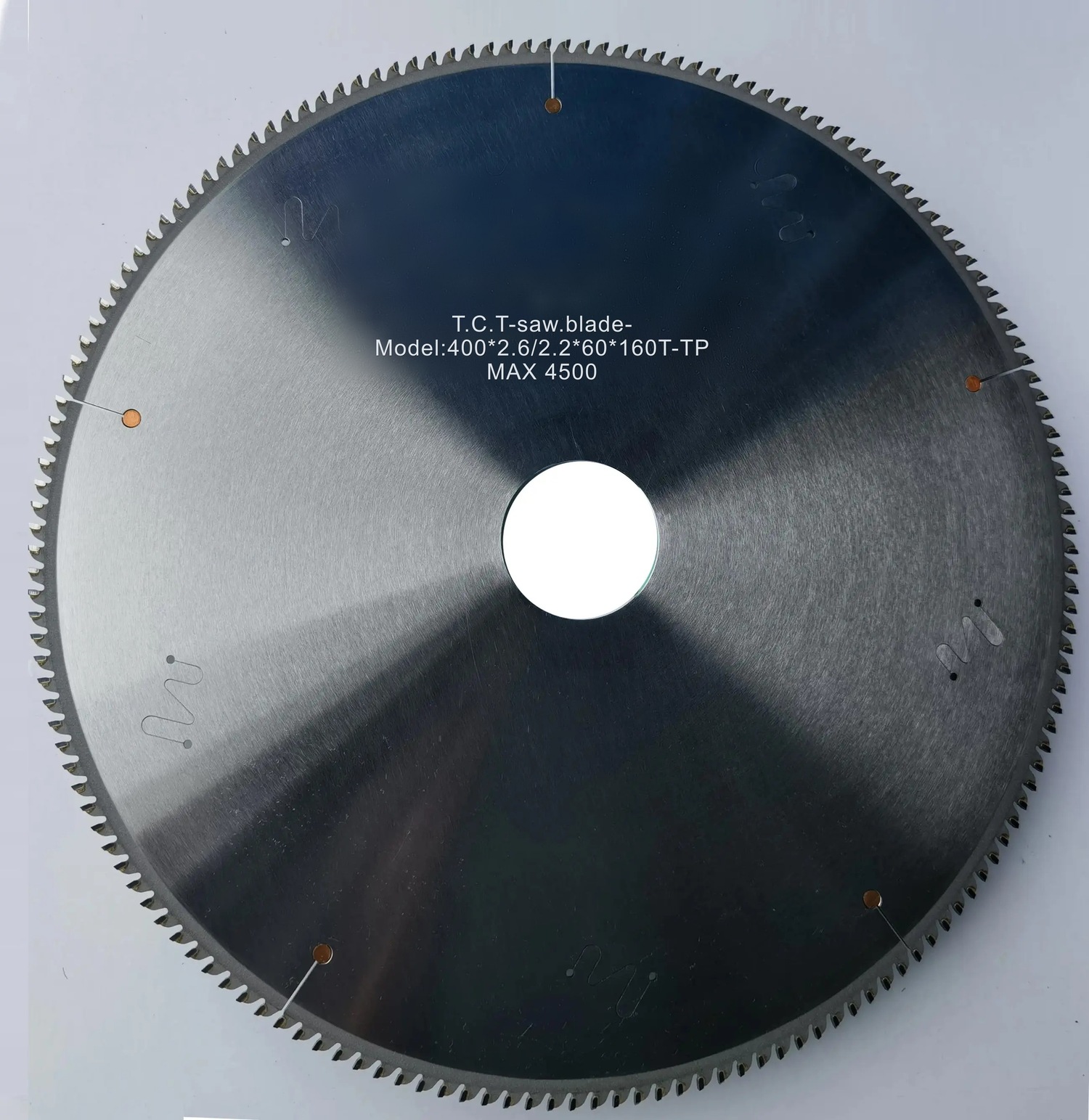
saw blades for woodworking
TCT Circular Saw Blades for Aluminium, Wood and Composite Cutting
TCT carbide tipped circular saw blades for aluminium, solid wood, MDF, chipboard and composite panels. Ground tips, tensioned alloy steel bodies, 120 to 550 mm.
Specifications
- Tip Material
- TCT (tungsten carbide tipped), K10 to K20 grades
- Body Material
- Alloy steel (SKS51 class), hardened and tensioned
- Applications
- Aluminium profiles, non-ferrous metals, solid wood, MDF, chipboard, plywood, plastics
- Tooth Geometry
- ATB, TC, flat, and raker combinations
- Diameter Range
- 120 mm to 550 mm
- Kerf
- 2.4 mm to 4.4 mm (matched to the machine)
- Bore
- 20 mm to 80 mm, pin holes to drawing
- Customization
- Diameter, tooth count, bore and tooth profile made to machine requirements
Tungsten carbide tipped blades are the workhorse of any cutting shop: a hardened steel body carrying individually brazed carbide tips, ground on four faces to a defined tooth geometry. On aluminium, solid wood, MDF and plastics they cut cleanly, sharpen repeatedly and cost a fraction of a diamond blade.
This range covers diameters from 120 to 550 mm with kerf from 2.4 to 4.4 mm, bores from 20 to 80 mm, and tooth geometries from fine ATB cross-cut to TC and raker combinations for non-ferrous work.
Matching the tooth geometry to the material
Aluminium wants a high positive hook angle, large gullets and a TC or triple-chip tooth so the chip is sheared and cleared rather than smeared. Solid wood wants ATB or Hi-ATB for a clean cross-cut. MDF and chipboard want a moderate hook and a robust tooth that survives the abrasive filler. Plastics want a low hook and polished faces to stop the chip welding to the tip.
Using a wood blade on aluminium is the fastest way to destroy both the blade and the surface finish — the tooth geometry and the rake are wrong for the material, not just the tip grade.
Kerf, plate and spindle load
Kerf is the width of material the blade removes; plate thickness is the steel behind the tip. A thin plate saves material but carries less tension, so it is only stable up to a certain diameter and speed. On a large diameter at high feed the plate has to be heavier, and the spindle has to be able to drive it.
Sharpening and service life
TCT blades are re-ground on the face, top and both sides of each tip, which restores the geometry and the cutting diameter. A blade re-sharpened before it dulls holds its line and its finish much better than one run until it stops cutting, and the number of regrinds a body accepts depends on how much carbide is left on the tip.
Ordering
State diameter, kerf, bore, tooth count and the material being cut. Add the machine make and model if the arbor has pin holes or a non-standard keyway. Blades are produced to drawing, so a sample or a marked-up old blade is the most reliable reference.
Carbide gives you the geometry you ask for; the material decides which geometry to ask for.
ZhongJian Tech manufactures PCD diamond and TCT carbide circular saw blades, cold saw blades and diamond stone-cutting blades in Futian Town, Anyuan District, Pingxiang City, Jiangxi Province, China. Send your blade diameter, bore, kerf, tooth count and machine model for a specification and quotation. Email ferrytk803@gmail.com, phone / WhatsApp +86 13617995900.
Frequently asked questions
Does this cutter fit my edgebander?
The bore is 20 mm to 80 mm, pin holes to drawing and the machines it is built for are listed in the specification table. Four values decide the fit — outer diameter, height, bore and Z layout — and the machine brand narrows the choice without replacing the measurement. Check the bore and the keyway against your spindle before ordering.
Is it a direct replacement for the OEM part number?
Send the part number engraved on the existing head together with the machine make and model, and the specification is cross-referenced against it.
What happens when the cutting edges dull?
The cutting edges are TCT (tungsten carbide tipped), K10 to K20 grades. A dull head shows up first as a rougher edge, then as a glue line that opens on every panel. Deal with it on condition rather than on a fixed calendar, because the wear rate depends on the panel material and the feed rate.
Which panels does it cut cleanly?
The requirement in every case is the same: no chipping on the top and bottom face, because the banding covers the edge and not the face. Feed rate, spindle speed and cutter condition all have to match for that to hold.