
Cutting for Iron
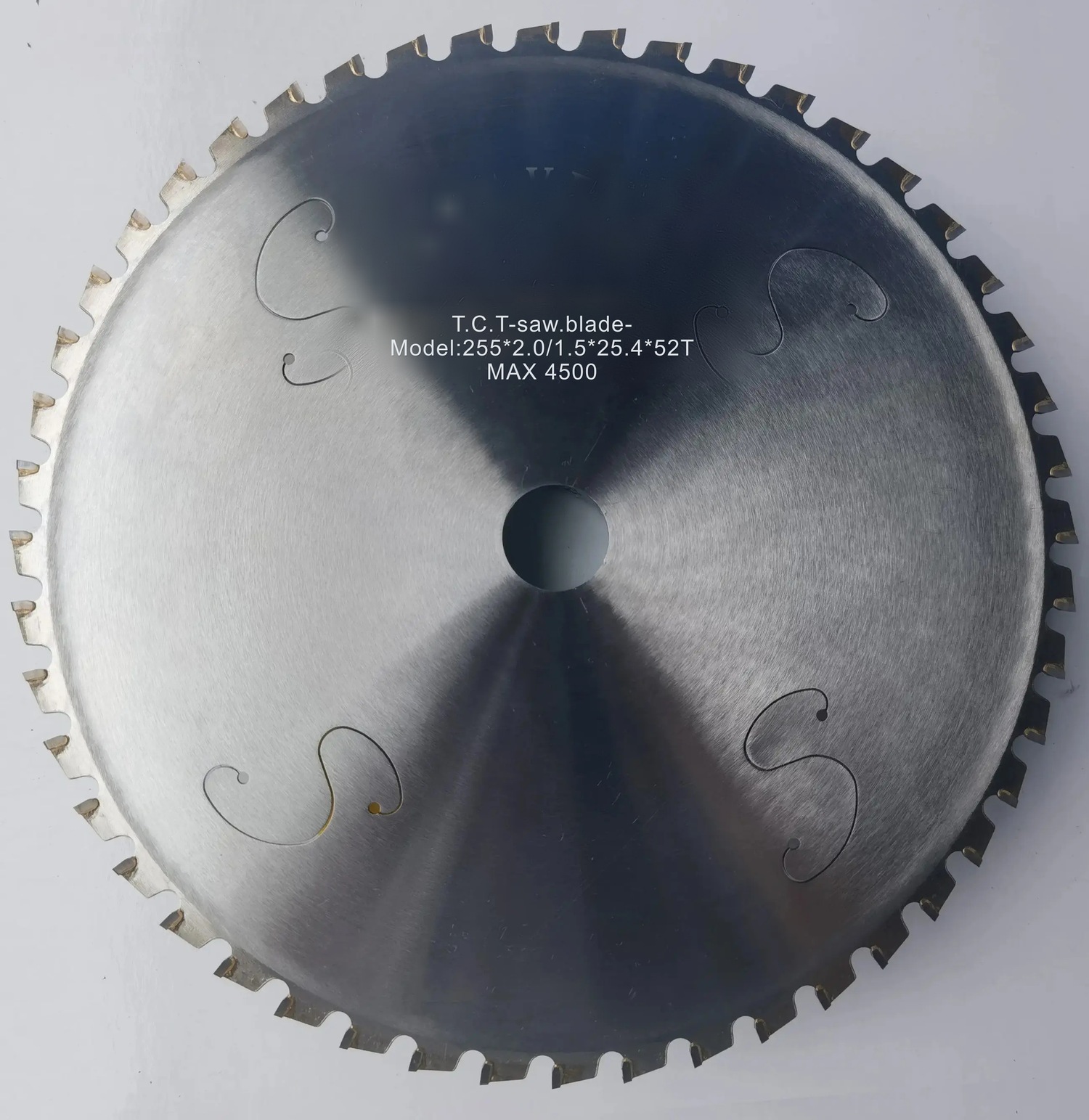
TCT 255 x 2.0/1.5 x 25.4 x 52T Circular Saw Blade for Iron and Steel Cutting
TCT circular saw blade 255 x 2.0/1.5 x 25.4 mm, 52 teeth, for cutting mild steel tube, pipe, bar, angle and profile on dry cut-off saws.
Specifications
- Outer Diameter
- 255 mm
- Kerf
- 2.0 mm
- Plate Thickness
- 1.5 mm
- Bore
- 25.4 mm (1 inch)
- Teeth
- 52T
- Tooth Geometry
- ATB fine tooth for thin-wall steel
- Tip Material
- TCT (tungsten carbide tipped), metal-cutting grade
- Body Material
- Hardened and tensioned alloy steel
- Cutting Material
- Mild steel, carbon steel, stainless tube, pipe, bar, angle and profile
- Machine
- Dry cut-off saw, chop saw, cold cut saw
- Recommended Speed
- 1,300 to 1,800 RPM - follow the saw manufacturer rating
- Customization
- Diameter, bore, tooth count and carbide grade produced to machine requirements
A 255 mm carbide-tipped blade for cutting steel is a different tool from a wood blade of the same size. The tooth geometry is finer, the carbide grade is tougher, the plate is thinner and the safe spindle speed is far lower. Running a wood blade in a steel saw, or the other way round, is the most common cause of destroyed blades and damaged machines.
This blade is 255 x 2.0/1.5 x 25.4 mm with 52 teeth, intended for dry cut-off saws and chop saws cutting mild steel and carbon steel tube, pipe, bar, angle and profile. The 2.0 mm kerf keeps the cut narrow so the blade removes less material and generates less heat.
Why a thin kerf matters on steel
Every millimetre of kerf is material turned into chips, and on steel that material has to be removed by the teeth rather than sheared away. A 2.0 mm kerf blade on a 255 mm saw reduces the chip load per tooth and lets a lower-powered saw finish the cut without stalling. It also means less heat in the workpiece, which is what keeps the cut edge straight and the burr small.
The trade-off is a more delicate plate. A thin-kerf steel blade will not tolerate side load, so the workpiece has to be clamped square and fed straight. If the material is fed in by hand at an angle, the plate will deflect and the cut will run off.
Tooth count and finish
52 teeth on a 255 mm blade is a general-purpose metal count: fine enough for a clean edge on tube and thin-wall profile, coarse enough that the gullets can carry the chip away without packing. For solid bar or heavy-wall section, a lower tooth count clears chips better. For stainless, a higher count and a dedicated carbide grade give a longer life.
The teeth are ground with an alternate top bevel and a positive rake, so the blade shears the metal rather than scraping it. That is what separates a carbide metal-cutting blade from an abrasive disc: the cut is a chip-forming cut, the edge stays square, and there is no abrasive dust in the shop.
Speed, clamping and coolant
The single most important number is spindle speed. A 255 mm TCT steel blade typically runs between 1,300 and 1,800 RPM depending on the saw and the material, which is well below the speed a woodworking blade of the same diameter would use. Always follow the rating on the saw and the maximum speed marked on the blade.
Dry cutting is normal for this type of blade. Some shops use a mist coolant on stainless to control heat and extend life; flood coolant is not used on a dry cut-off saw. Clamp the workpiece on both sides of the cut wherever the machine allows, and let the blade come to full speed before the teeth enter the material.
When the blade needs replacing
A steel-cutting TCT blade dulls gradually. The first sign is a brighter, rougher cut edge, then a burr that has to be filed off, then the blade starts to wander. Continuing to run a dull blade raises the temperature and can chip the carbide, at which point the cut quality drops sharply and the blade is no longer worth resharpening.
Blades of this type can usually be resharpened two or three times before the tooth geometry goes out of tolerance. If the carbide is chipped or the plate has lost tension, replace rather than resharpen.
Ordering the correct blade
Four values decide the fit: outer diameter, kerf, bore and tooth count. The machine sets the maximum diameter and the bore; the material sets the tooth count and the carbide grade. If you are replacing a blade, the fastest way to order is a photograph of the old blade with the markings visible, plus the machine make and model.
We also build this blade family in other diameters and bores for cold saws, fly saws and automatic cut-off machines. If your size is not listed, send the drawing or the old blade dimensions.
On steel, the blade is only half the equation - the other half is the speed and the clamping.
ZhongJian Tech manufactures PCD diamond and TCT carbide circular saw blades in Futian Town, Anyuan District, Pingxiang City, Jiangxi Province, China. Send the material you cut, the machine and the blade size you run now, and we will confirm the specification and quotation. Email ferrytk803@gmail.com, phone / WhatsApp +86 13617995900.
Frequently asked questions
What do I check before ordering?
This blade is 255 mm with a 25.4 mm (1 inch) bore. Match three things against the machine: the outer diameter against the saw’s capacity, the bore and pin holes against the spindle, and the tooth geometry against the section being cut. The bore is easy to measure; the pin holes are where machines of the same brand often differ. Where the arbor differs, the same tooth geometry is built to your spindle rather than you adapting the machine.
What does a 52T count change in the cut?
Tooth count is set against the thickness of the material being cut, not against the blade diameter alone. A finer count leaves a cleaner edge on thin-wall tube and profile; a coarser count clears the chip better in solid bar and heavy section. This blade is ATB fine tooth for thin-wall steel. Other counts are ground to order.
What speed should the saw run at?
1,300 to 1,800 RPM — follow the saw manufacturer rating. Treat that as the limit rather than the target: running above it heats the tips, blunts them faster and makes the cut wander. If the saw has no rating for the blade size, start low and raise the speed only while the chip comes off clean and the finish holds.
Which machine is this blade built for?
Dry cut-off saw, chop saw, cold cut saw. Send the make and model with the order and the bore, pin holes and tooth count are confirmed against it before production.
Which materials does it cut?
Mild steel, carbon steel, stainless tube, pipe, bar, angle and profile. Stay inside that range: a blade run in harder or more abrasive material than it was ground for loses its edge quickly, and the cut quality drops before the edge visibly fails.
What should I quote when I inquire?
TCT 255 x 2.0/1.5 x 25.4 x 52T Circular Saw Blade for Iron and Steel Cutting — plus the quantity and the machine make and model. Those three are enough to confirm the specification, the minimum quantity for the size and the production lead time in the quotation. When replacing a worn blade, a photograph of the marking stamped on the old blade shortens the check further.