Cutting Solid Wood with PCD Saw Blades: Speeds, Feeds and Finish
Solid wood behaves differently from panels. How PCD blades with the Kunlun teeth shape handle grain, knots and resin for a clean, stable cut.

Solid wood is the material saw blades were invented for, and it remains one of the hardest to cut well. Grain direction changes the cutting force, knots introduce impact, resin gums the tooth face, and moisture content shifts the way the material behaves from one batch to the next.
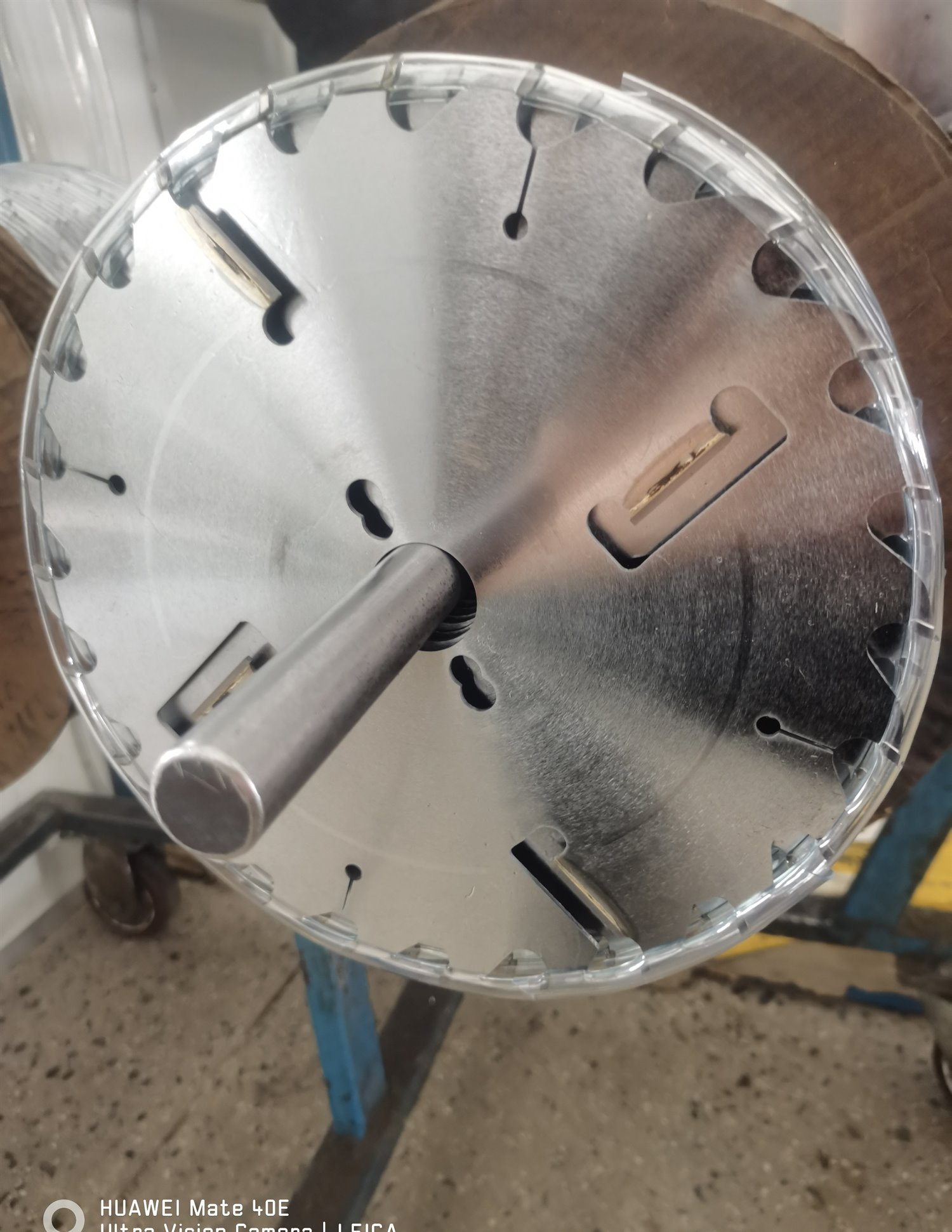
PCD blades with the Kunlun teeth shape handle solid wood differently from general-purpose carbide: the tip holds an edge through long runs, and the tooth geometry supports the cut rather than tearing the fiber.
Why grain direction changes everything
Cutting with the grain splits fibers along their length; cutting across it severs them. The same blade that leaves a clean edge on a rip cut can tear a cross cut, because the supported and unsupported sides of the cut swap places. That is why solid wood cutting rewards a tooth geometry that controls both entry and exit - the functional strength of the Kunlun teeth shape.
Speeds and feeds for solid wood
Solid wood tolerates a more aggressive feed than laminated panels, but the limits matter. Too fast and the tooth cannot clear its chip, which shows as burning and a rough surface; too slow and the blade rubs, which dulls the edge and loads the tooth with resin. Start conservative, watch the chip - fine dust means the blade is rubbing, chips mean it is cutting - and increase feed until the cut is clean and stable.
Handling knots, resin and moisture
Knots are local hardness changes that load individual teeth; a blade with consistent tip quality survives them, while a variable blade chips. Resin is a chemical wear problem: it builds on the tooth face and changes the cutting geometry, so cleaning the blade is as important as sharpening it. And moisture matters - green or damp timber cuts differently from kiln-dried stock, and the blade spec should reflect the worst case the shop actually handles.
Where PCD pays on solid wood
High-volume production - furniture frames, flooring, joinery runs - is where PCD earns its cost: months of cutting between sharpenings instead of days, with edge quality that does not drift. For low-volume or reclaimed timber with nails and grit, carbide remains the pragmatic choice.
The practical answer for most workshops is a PCD blade for production stock and a carbide blade for the rough, unknown material - the same logic that applies across panel cutting.
On solid wood, a clean cut is a supported cut: tooth geometry decides, not horsepower.
Kunlun Teeth Shape: Scoring-Saw-Free Panel Cutting with Cleaner Edges
The Kunlun teeth shape is a conical (step) tooth profile that performs preliminary trimming on panel edges with a single blade, enabling scoring-saw-free panel cutting with cleaner edges. It greatly minimizes edge chipping, rough burrs and notch tearing, eliminates uneven cutting edges caused by edge chipping, and delivers a flawless finish on single-sided or double-sided panels without a scoring saw.
ZHONGJIAN TECH manufactures PCD and carbide saw blades with the Kunlun teeth shape for woodworking, panel processing and aluminium cutting. Send your machine, material and size requirements to ferrytk898@gmail.com and we will confirm a blade specification and quotation.