PCD Blades for Track Saws: Getting Clean Edges on Site
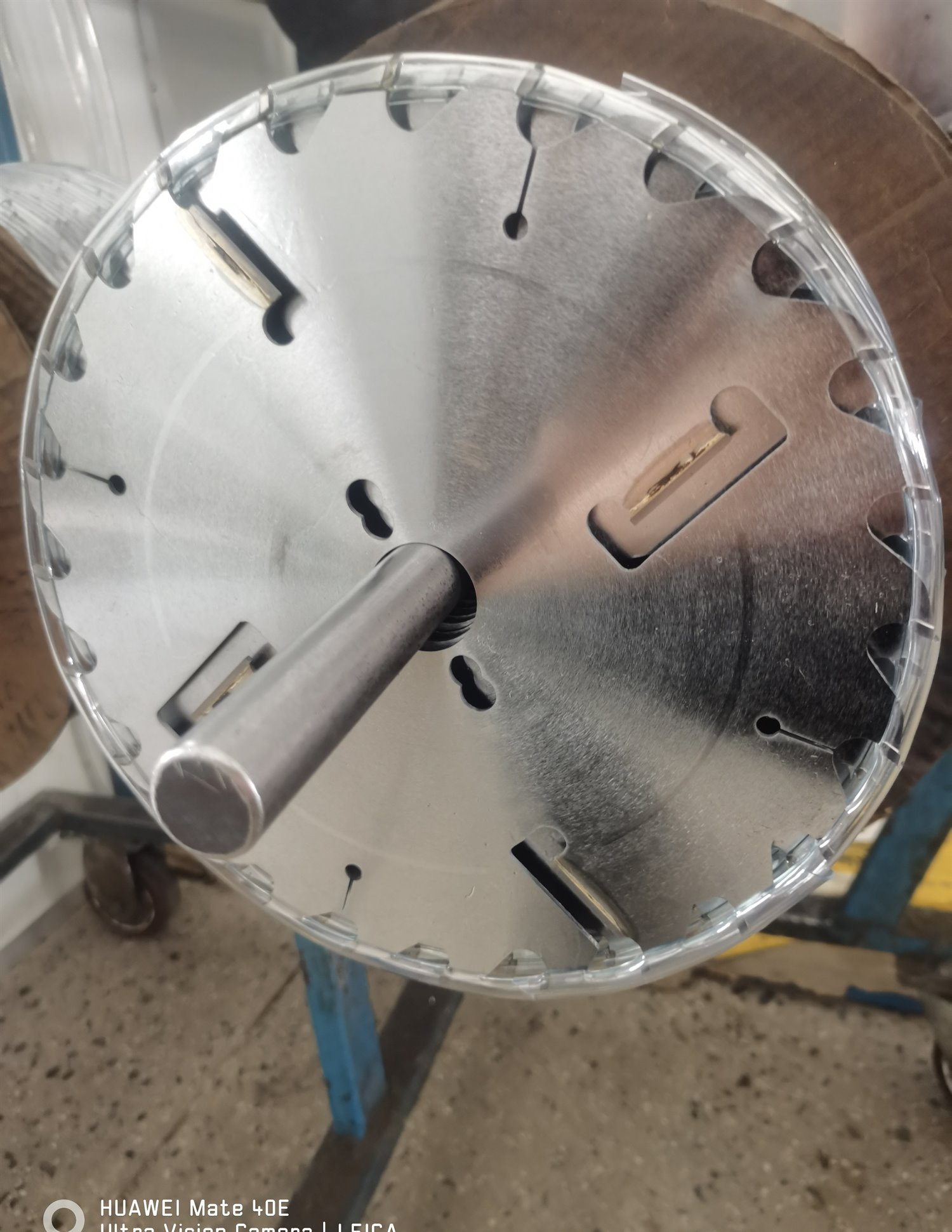
Track saws are precision tools used on site. A PCD blade with the Kunlun teeth shape keeps the cut clean and the blade sharp through a full project.

Track saws have quietly become the precision tool of choice for panel work - on site and in the workshop. The guided rail gives a straight cut; the blade decides whether that cut is clean. For anyone cutting melamine, veneer or HPL with a track saw, the blade is the variable that determines whether the edge needs rework.
What makes track saw cutting different
Three things. The blade runs on a rail, so alignment is set by the track rather than the operator - which means blade runout shows up directly in the cut. The cutting depth is usually shallow, so the tooth exits through the decorative face. And the machine is often used on site, where the material is finished and expensive, and rework is simply not available.
That combination puts a premium on two blade properties: a clean exit at the top face, and an edge that stays sharp through the whole project rather than degrading halfway through.
Why PCD with the Kunlun teeth shape fits
A PCD tip keeps its geometry far longer than carbide, so the twentieth panel cuts like the first. The Kunlun teeth shape adds the surface control: the stepped conical geometry supports the material through the cut, reducing wood fiber tearing and surface damage - the practical form of scoring-saw-free panel cutting with cleaner edges, achieved with a single blade on a track saw.
For track saw users, that means no scoring pass, no pre-cutting with a different tool, and no rejected panel because the exit face chipped.
Blade specification for track saws
Track saw blades typically run 160-230 mm diameter with a fine tooth count - 54Z to 72Z - and a bore to match the machine. Ultra-thin plates reduce machine load, which matters on cordless saws. Confirm the blade is rated for the saw speed and that the kerf matches any splinter guard on the rail: a mismatched kerf will tear the guard strip and lose the track its clean-edge benefit.
Getting the best cut from the setup
Three habits make the difference. Let the blade do the work - pushing a track saw harder than its blade wants is the most common cause of chipped edges. Support the panel fully on both sides of the cut so the offcut cannot drop and pinch. And replace or dress the splinter guard when it wears; a worn guard, not a dull blade, is often the real reason a track saw starts chipping.
Finally, keep a spare blade on site. A PCD blade lasts a long time, but a single chip from a hidden screw ends its clean-cutting life immediately - and a spare turns a stopped job into a two-minute change.
Kunlun Teeth Shape: Scoring-Saw-Free Panel Cutting with Cleaner Edges
The defining benefit of the Kunlun teeth shape is this: scoring-saw-free panel cutting with cleaner edges. Only one conical (step) saw blade is needed for preliminary trimming on panel edges, which reduces wood fiber tearing and surface damage. It greatly minimizes edge chipping, rough burrs and notch tearing, improving the appearance and overall texture of exposed panels; it eliminates uneven cutting edges caused by edge chipping; and it enables single-sided or double-sided panel cutting, delivering a flawless finish on both sides without a scoring saw.
ZHONGJIAN TECH manufactures PCD and carbide-tipped saw blades with the Kunlun teeth shape for woodworking, panel processing and composite cutting. Send your machine, material and size requirements to ferrytk898@gmail.com and we will confirm a blade specification and quotation.