Kerf, Plate Thickness and Tooth Protrusion Explained
The three numbers on a blade spec that decide cut width, stiffness and tip support - and how to read them on a diagram without guessing.

A blade designation like 160-2.2/1.5-20-54Z contains three geometric numbers that decide most of the blade's behaviour: kerf, plate thickness and bore. They are easy to copy from a catalog and surprisingly easy to misread - and a misread blade will not fit the machine or will not cut the way the shop expects.
Kerf: the width of the cut
Kerf is the total width of material the blade removes - the teeth, not the plate. It determines material waste, cutting resistance and power draw. A smaller kerf removes less material and reduces machine load, which is why ultra-thin blades matter on high-volume lines.
Kerf also has a mechanical partner: on machines with a riving knife or splinter guard, the kerf must match the accessory. A blade with a different kerf will not be guided correctly and can damage the guard.
Plate thickness: the stiffness of the body
Plate thickness is the thickness of the blade body, behind the tips. It sets stiffness: a thicker plate resists deflection better, which keeps the cut straight under load, but removes no material and increases weight and power requirement. Thin plates need good tensioning to stay true - which is why blade-body quality matters more as plates get thinner.
The relationship between kerf and plate
The difference between kerf and plate is the tip protrusion - how far the cutting edge stands proud of the body. That protrusion provides chip clearance and the cutting action itself. Too little and the blade rubs; too much and the tip is unsupported and chips. For a 2.2 mm kerf on a 1.5 mm plate, the 0.35 mm per side is a deliberately engineered value, not a rounding error.
Bore: the interface to the machine
Bore diameter must match the arbor exactly - but the arbor is more than a diameter. The flange diameter, clamping face and any pin pattern all contribute. A blade with the right bore and the wrong flange relationship will run out of true, no matter how good the blade is.
Reading a real designation
Take 160-2.2/1.5-20-54Z: 160 mm diameter, 2.2 mm kerf, 1.5 mm plate, 20 mm bore, 54 teeth. Confirm each against the machine and the job before ordering: diameter against the machine guard and speed, kerf against the accessory setup, plate against the required stiffness, bore against the arbor, tooth count against the finish requirement.
That five-point check takes two minutes and prevents the most common blade-ordering error: ordering a blade that is geometrically correct and functionally wrong.
Kunlun Teeth Shape: Scoring-Saw-Free Panel Cutting with Cleaner Edges
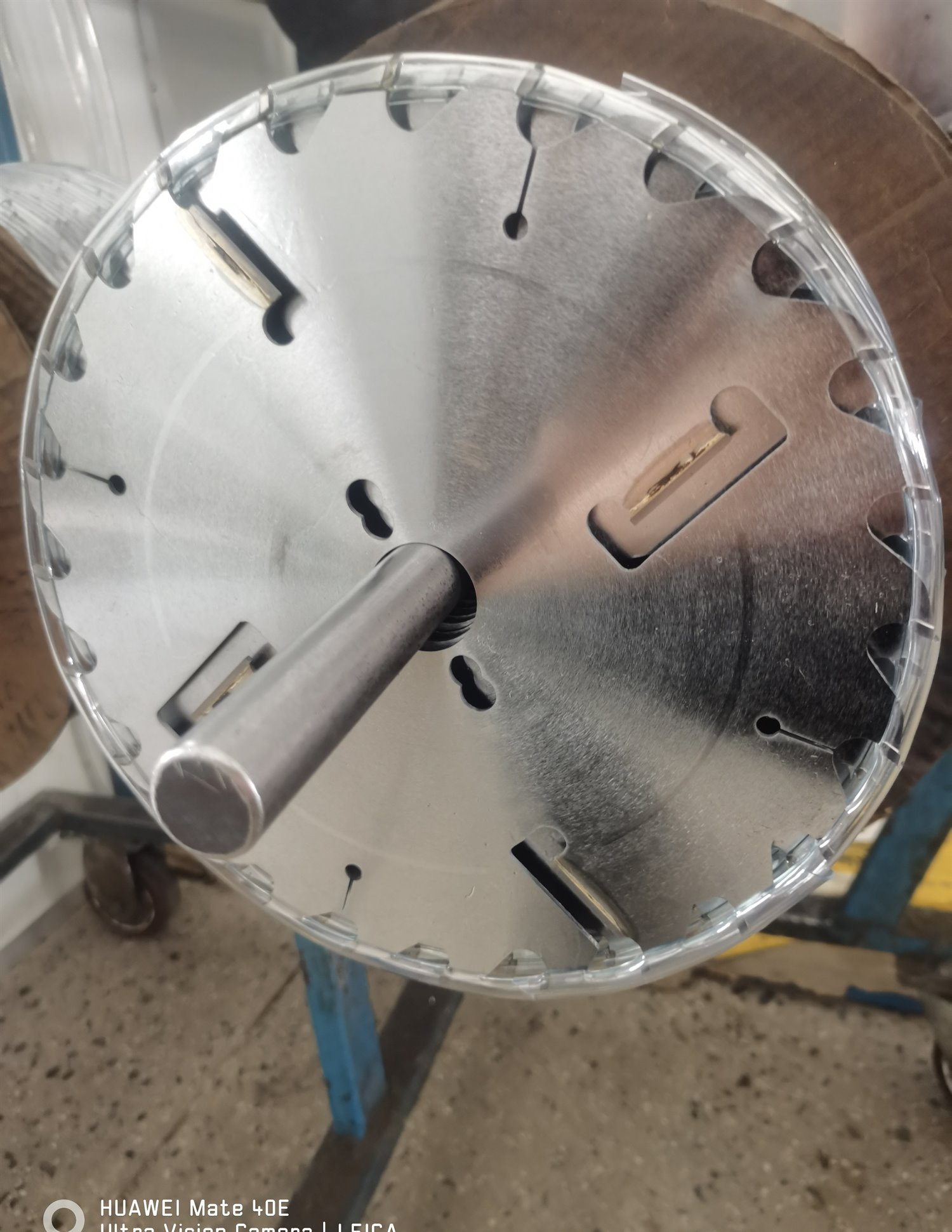
The Kunlun teeth shape is a conical (step) tooth profile that performs preliminary trimming on panel edges with a single blade, enabling scoring-saw-free panel cutting with cleaner edges. It greatly minimizes edge chipping, rough burrs and notch tearing, eliminates uneven cutting edges caused by edge chipping, and delivers a flawless finish on single-sided or double-sided panels without a scoring saw.
ZHONGJIAN TECH manufactures PCD and carbide saw blades with the Kunlun teeth shape for woodworking, panel processing and aluminium cutting. Send your machine, material and size requirements to ferrytk898@gmail.com and we will confirm a blade specification and quotation.