Chip Evacuation and Cut Finish: Tooth Geometry Beyond the Tip
Chip clearance, gullet volume and tooth form decide whether a cut finishes clean or burns. Why tooth geometry matters as much as tip material.

Two blades with identical PCD tips can produce very different cuts. The difference is what happens to the chip: how it is formed, how much space it has to leave the cut, and whether it leaves cleanly or is re-cut into dust. Chip evacuation is the least discussed part of saw blade design and one of the most consequential.
The chip has to go somewhere
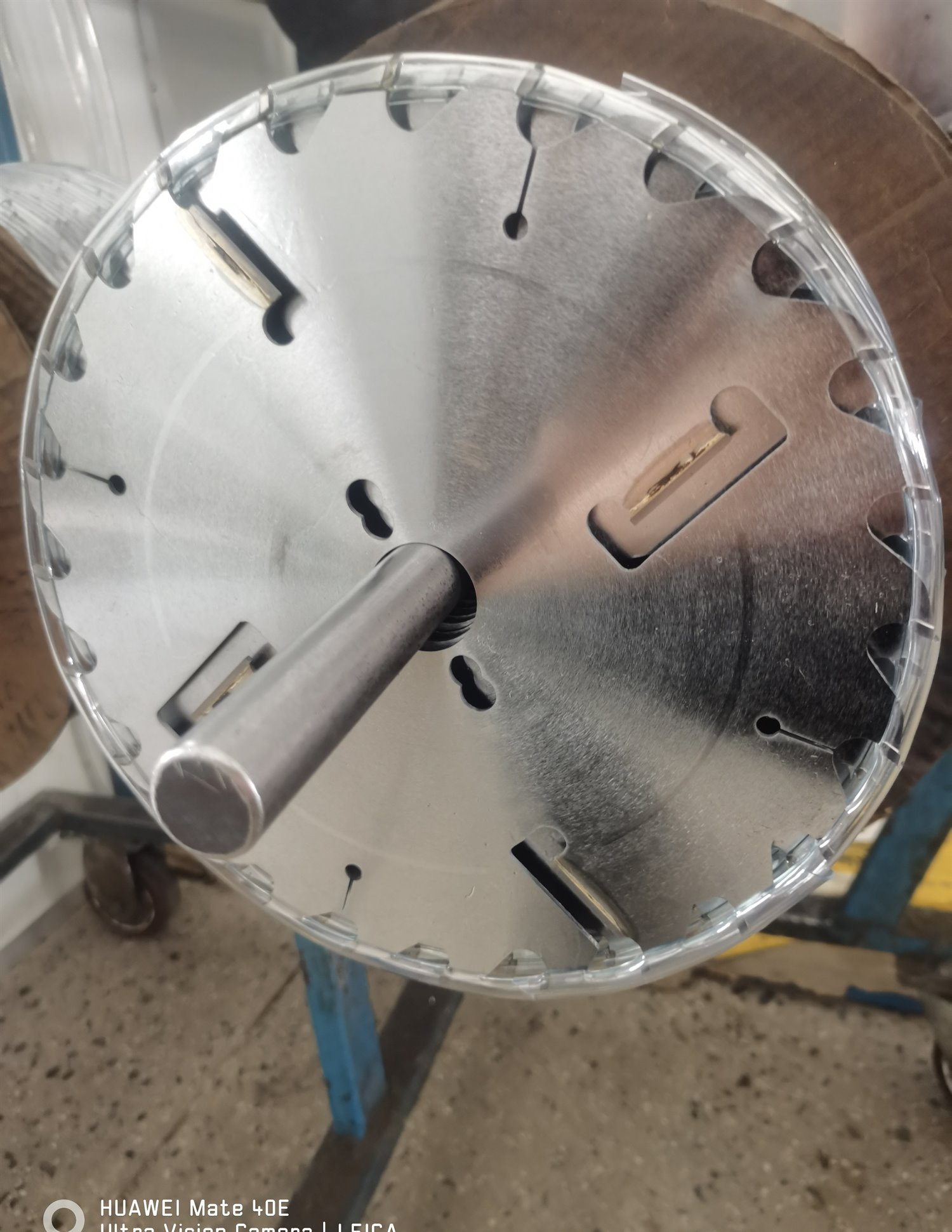
Every tooth removes material. That material must clear the tooth before the next revolution brings the tooth back into the cut. If the gullet - the space between teeth - is too small for the chip load, material is trapped, re-cut and compacted. The result: heat, a dull-sounding cut, a burned or glazed edge, and accelerated tip wear.
Gullet volume is therefore matched to the feed rate and material. A blade with generous gullets clears chips fast and suits thicker material or higher feed; a fine-tooth blade with small gullets gives a smooth finish but demands a controlled feed.
Fine finish versus clearance
This is the trade-off that decides tooth count. More teeth mean more cuts per revolution and a smoother edge - but also less gullet space per tooth. That is why high-tooth-count blades for panel work are run at moderate feed rates, and why pushing them faster produces exactly the burning and chip welding they were bought to prevent.
A surface-controlling geometry such as the Kunlun teeth shape helps on both sides of the trade-off: the stepped profile supports the material through the cut, so the edge stays clean even while the tooth count is chosen for chip clearance rather than finish alone.
Where chips get trapped
Three places. In the kerf itself, when the blade is buried and the chip has to travel the full depth of cut. Under the workpiece, where extraction may be weak. And at the tooth face, where a dull or worn tip compacts material instead of severing it. Extraction design - hoods, ducting, airflow - matters as much as blade specification, especially in MDF and fine-dust materials.
Reading the cut for evidence
Look at the edge under raking light. A clean shear leaves a uniform surface with crisp edges. Burning shows as a brown glaze along the cut. Chip welding shows as small, hard deposits on the blade tip. Torn fiber shows at the exit side. Each points to a different cause - feed rate, extraction, tip condition or geometry - and each is fixable once identified.
A blade that cannot clear its chips cannot cut cleanly, no matter how sharp its tips are.
ZHONGJIAN TECH manufactures PCD and carbide-tipped saw blades with the Kunlun teeth shape for woodworking, panel processing and composite cutting. Send your machine, material and size requirements to ferrytk898@gmail.com and we will confirm a blade specification and quotation.