Edgebander Cutters
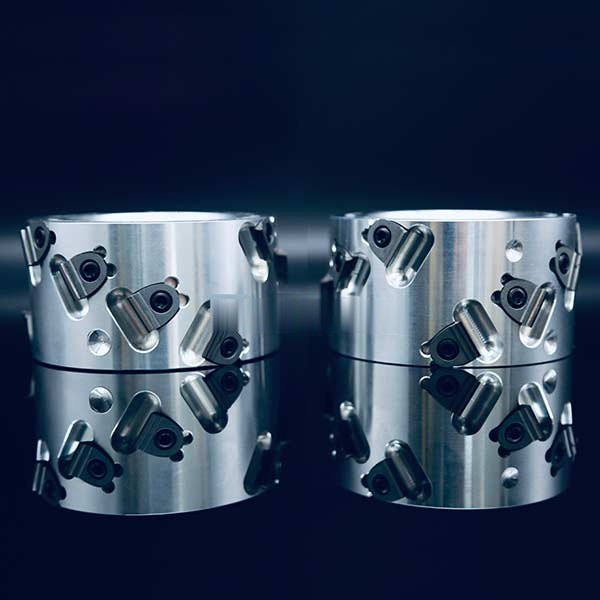
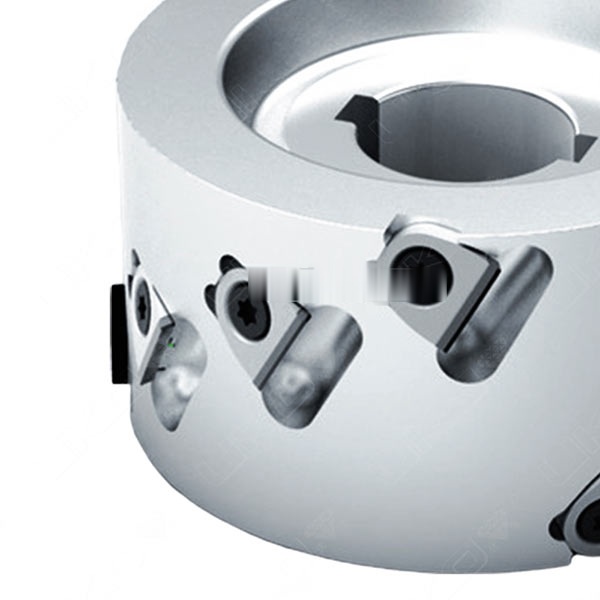
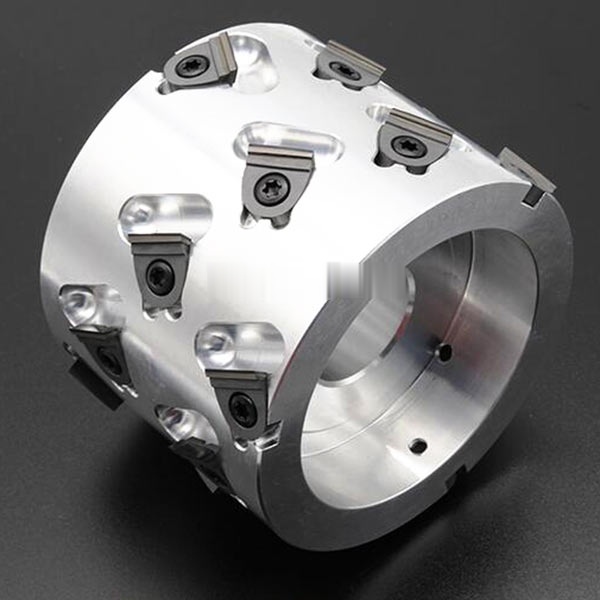
WhisperCut PCD Insert Pre-Milling Cutter with Aluminium Body for Edgebanders
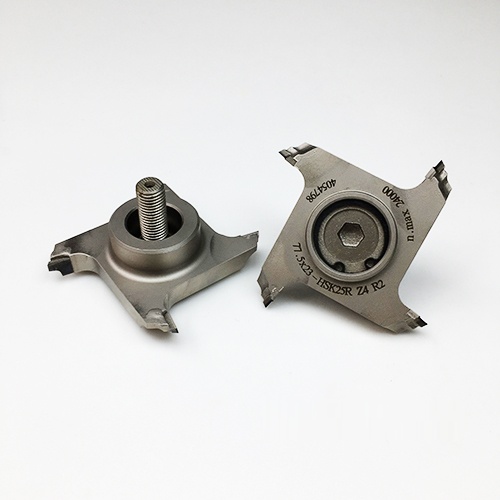
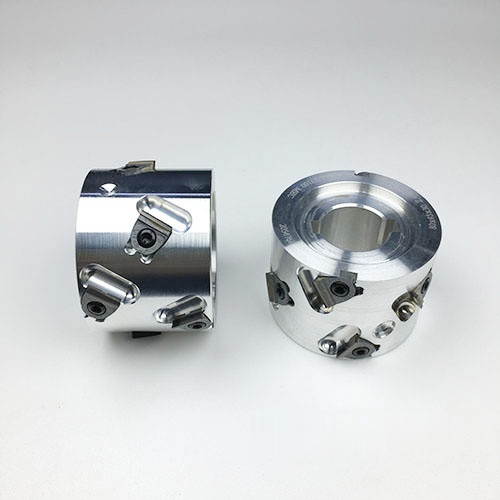
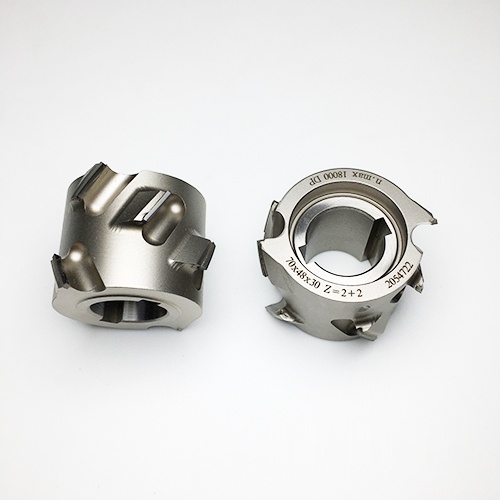
WhisperCut PCD pre-milling cutter with a low-weight aluminium alloy body and replaceable, resharpensable diamond inserts for lower spindle load and cutting noise.
Specifications
- Type
- PCD jointing / pre-milling cutter head
- Body Material
- Aluminium alloy, low weight
- Cutting Material
- PCD (polycrystalline diamond) inserts
- Insert Type
- Replaceable and resharpensable
- Design
- Symmetrical or asymmetrical insert layout
- Typical Size
- 80 x 35 x 30 mm, Z 3+3 (other sizes to order)
- Machine Brands
- Homag, Brandt, IMA, IMA Advantage, Biesse, HOLZ-HER, Cehisa
- Application
- Chip-free jointing of chipboard, MDF, plywood, veneered and laminated panels
- Customization
- Diameter, height, bore and insert layout produced to machine requirements
An edgebander pre-milling head sits in front of the glue pot and trims the raw board edge square before the banding goes on. On a production line that cuts tens of metres per minute, two shifts a day, the head is the tool that decides whether the finished joint is invisible or shows a glue line on every panel.
This WhisperCut head uses a low-weight aluminium alloy body carrying replaceable PCD inserts. It is the version to specify when the machine spindle, the noise level in the shop or the cost per metre matter as much as the cut quality.
Why an aluminium body rather than a steel one
A pre-milling head is rotating mass sitting at the end of a spindle. Reducing the body weight reduces the radial load the spindle bearings see at every revolution, and on a head that runs all day that shows up as lower bearing temperature and longer spindle life. It also lowers the inertia the machine has to accelerate and brake.
The second benefit is noise. A lighter, optimised body radiates less sound than a solid steel block, and the insert mounting is designed to damp the cutting noise rather than transmit it into the body. On a line where the operator stands next to the machine for a full shift, that difference is worth having.
Replaceable inserts change the economics
A brazed PCD head has to go back to the tool grinder when it dulls, which means a spare head and a shipping cycle. An insert head is different: the insert is a separate indexable part, so a dull edge is dealt with by rotating the insert to a fresh edge, and a worn insert is replaced on the machine.
That changes the cost model. The body is bought once and lasts for years; the inserts are the consumable, and they can be resharpened several times before replacement. For a shop running high volume it is usually the lowest cost per linear metre of board.
Symmetrical and asymmetrical layouts
Because the inserts are separate parts, their position can be changed. A symmetrical layout balances the cutting forces and is the normal choice for edge jointing on both faces of the panel. An asymmetrical layout shifts the cutting action, which is used where the machine geometry or the edge profile calls for it.
The same body can therefore serve more than one requirement, and the layout can be changed in the workshop rather than by ordering a new head.
What it cuts
Chipboard, MDF, plywood, and panels with melamine, paper, HPL, PVC or veneer faces. The requirement is that the pre-milled edge is free of chipping on the top and bottom face, because the banding only covers the edge - not the face.
How to specify the head
Four values decide the fit: outer diameter, height, bore and the Z layout. The machine brand narrows the choice but does not replace the measurement. Send the machine make and model, the panel material and, if you have it, the part number of the head you are replacing.
The body is bought once; the inserts are the consumable. That is the whole argument for an insert head.
ZhongJian Tech manufactures PCD and diamond edgebander tooling - jointing cutters, pre-milling heads, edge rounding cutters and replaceable insert systems - in Futian Town, Anyuan District, Pingxiang City, Jiangxi Province, China. Send the machine brand and model, the panel material and the part number you are replacing, and we will confirm the specification and quotation. Email ferrytk803@gmail.com, phone / WhatsApp +86 13617995900.
Frequently asked questions
Does this cutter fit my edgebander?
The bore is given in the specification table above and the machines it is built for are Homag, Brandt, IMA, IMA Advantage, Biesse, HOLZ-HER, Cehisa. Four values decide the fit — outer diameter, height, bore and Z layout — and the machine brand narrows the choice without replacing the measurement. Check the bore and the keyway against your spindle before ordering.
Is it a direct replacement for the OEM part number?
Send the part number engraved on the existing head together with the machine make and model, and the specification is cross-referenced against it.
What happens when the cutting edges dull?
Because the edges are separate inserts, a dull edge is dealt with by rotating or replacing the insert rather than sending the whole head for regrinding — the body stays in service.
Which panels does it cut cleanly?
Its application is chip-free jointing of chipboard, MDF, plywood, veneered and laminated panels. The requirement in every case is the same: no chipping on the top and bottom face, because the banding covers the edge and not the face. Feed rate, spindle speed and cutter condition all have to match for that to hold.