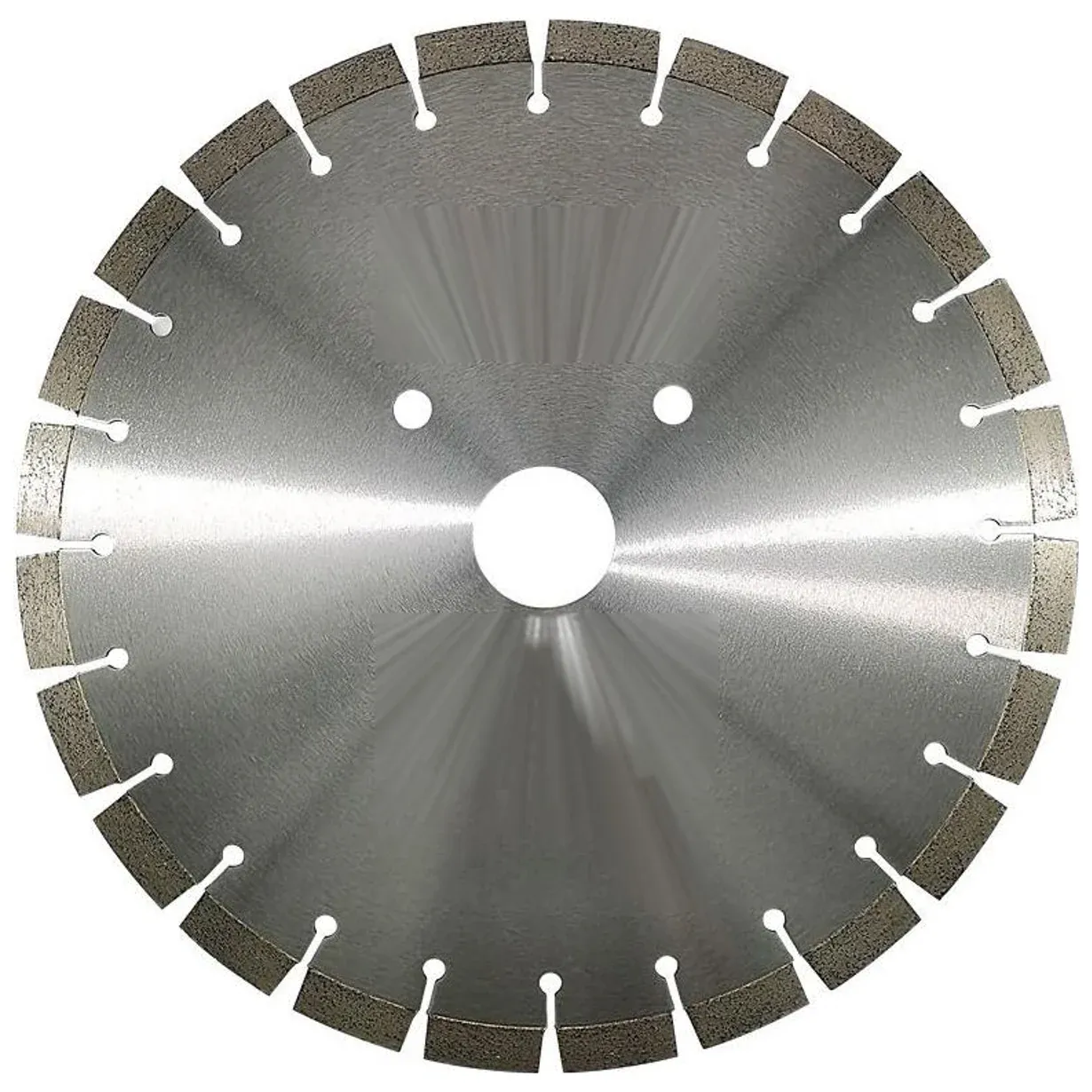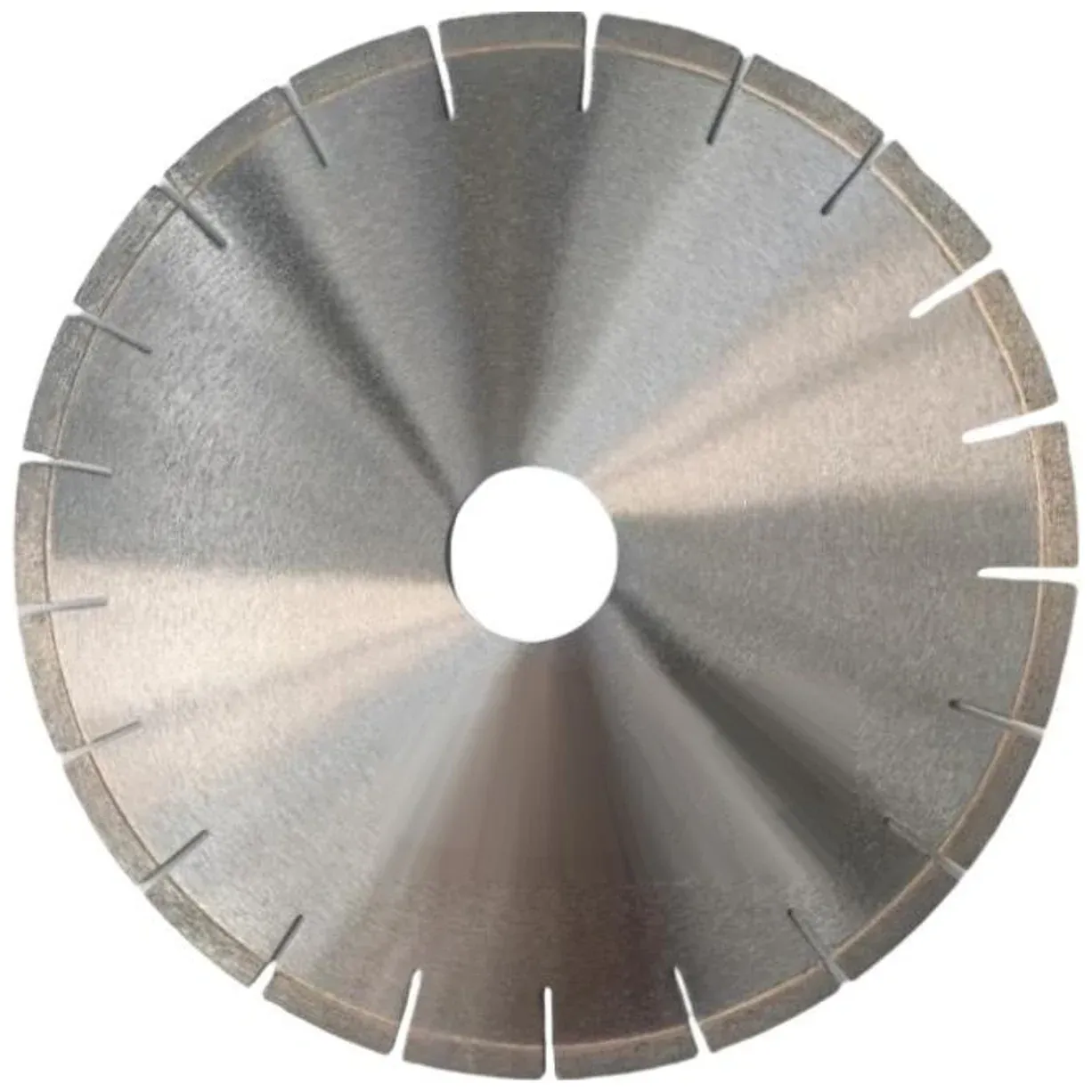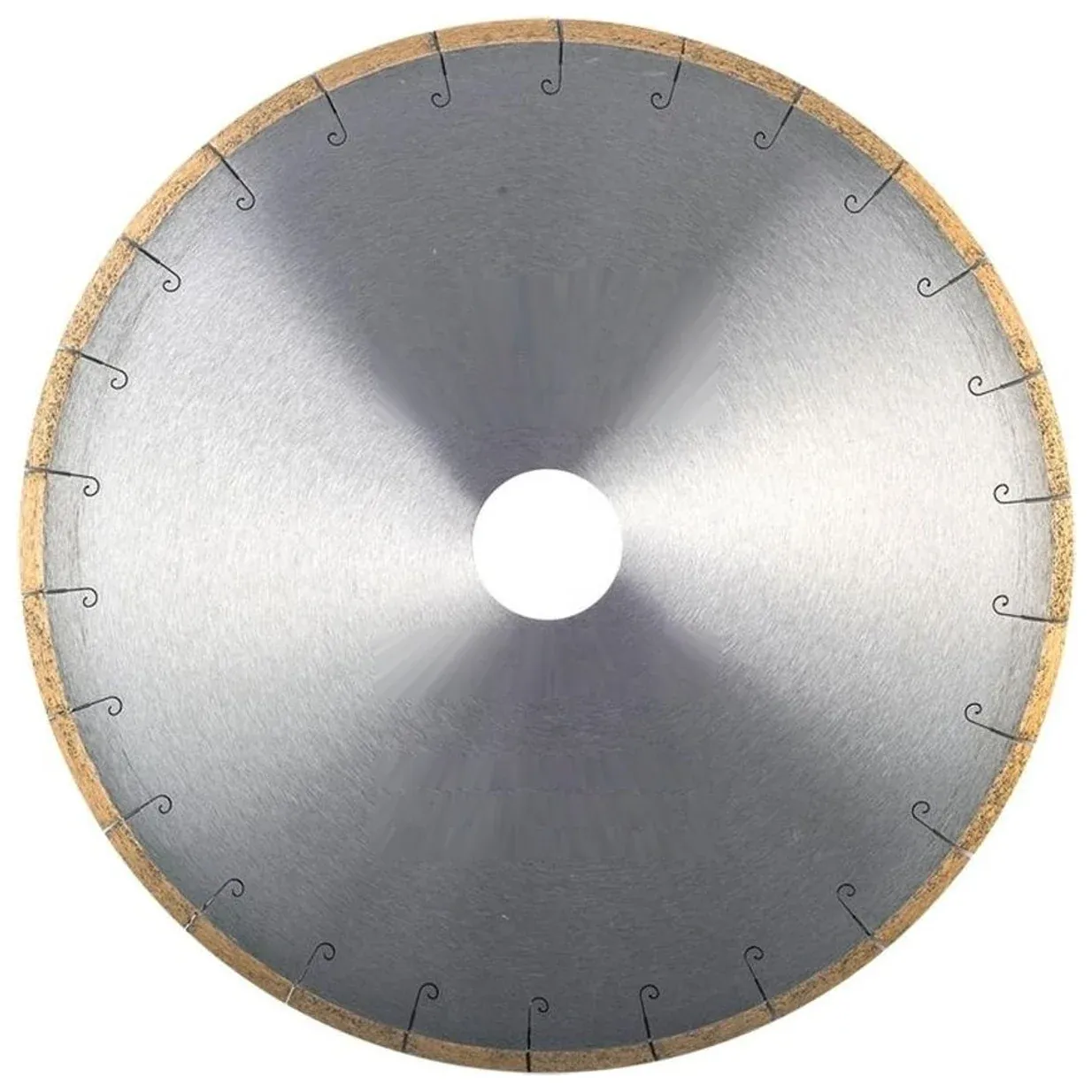
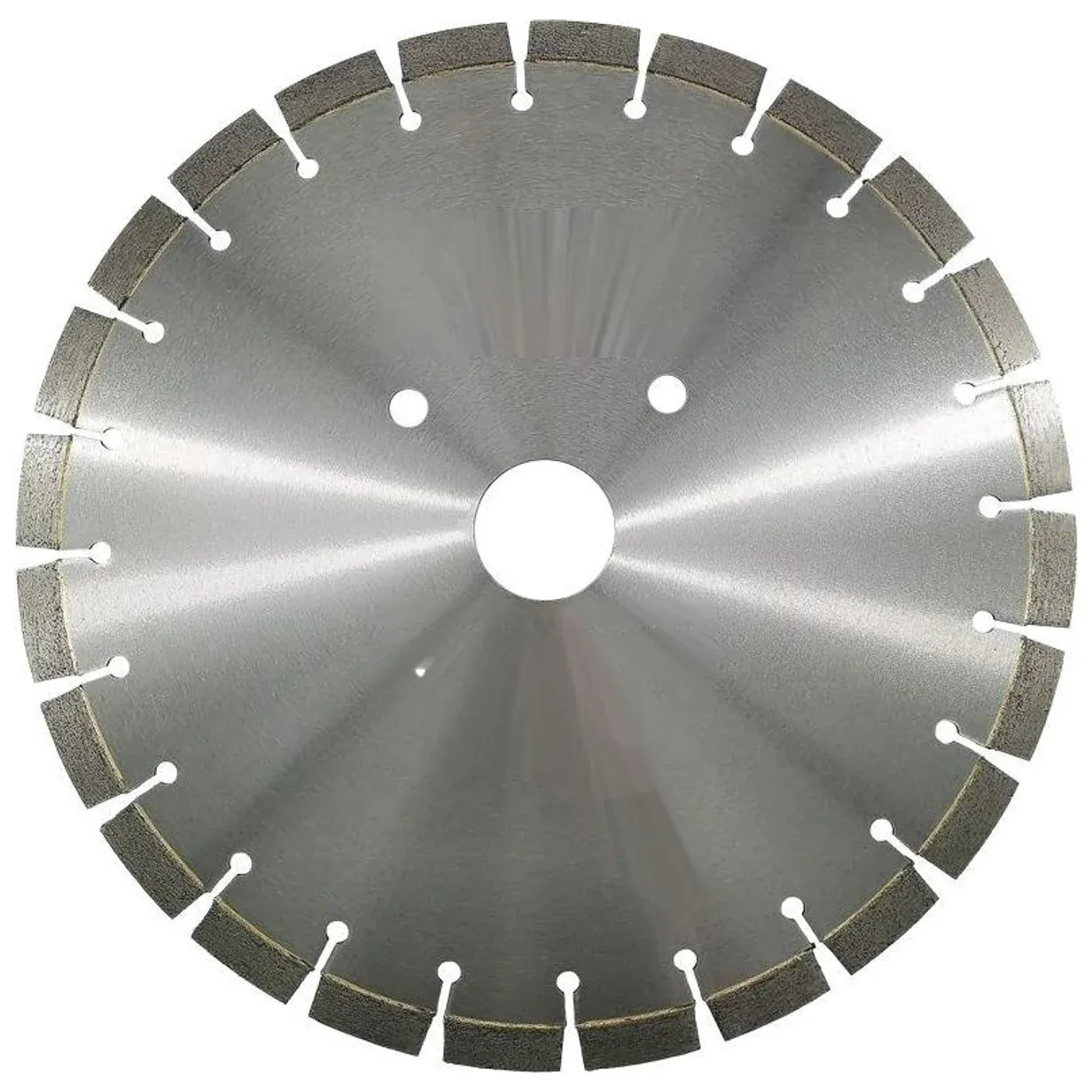
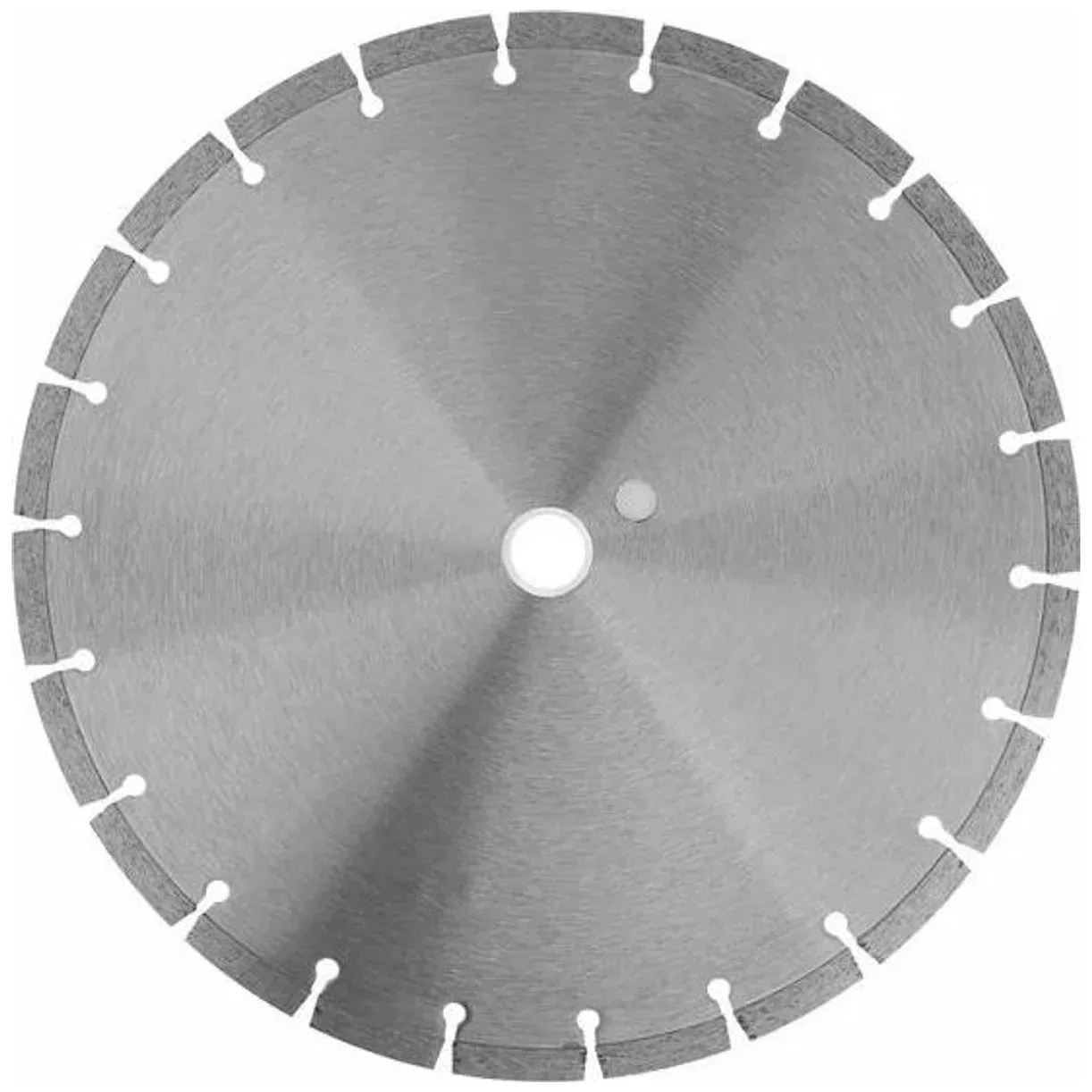
Diamond saw blades(for marble/dekton/concrete)
Diamond Saw Blade for Concrete
Diamond blade for concrete, 350 to 800 mm, 40 mm segment with 15 mm height and 50 or 25.4 mm bore, for road saws, floor saws and cut-off saws.
Specifications
- Type
- Diamond segmented circular saw blade, welded segments
- Application
- Concrete, reinforced concrete and concrete products
- Diameter
- 350 mm, 400 mm, 500 mm, 600 mm, 700 mm, 800 mm
- Segment size
- 40 mm segment, 3.8 to 6 mm thickness, 15 mm height
- Bore
- 50 mm or 25.4 mm
- Cutting
- Wet or dry depending on the machine and the job
- Customization
- Other sizes produced to order
Concrete is abrasive rather than hard: it wears the bond away before it blunts the diamond. A blade for it therefore carries a taller 15 mm segment and a thicker plate, from 3.8 mm at 350 mm up to 6 mm at 800 mm, because the load on a deep cut in reinforced concrete is carried by the plate as much as by the segment.
Reinforcement changes the cut
Steel in the section is cut by the same segment, and it is where a blade is most often damaged: the segment corners take the impact and the plate can deflect if the feed is forced. A steady feed and a blade that is not worn past its segment height do more for life in reinforced concrete than a different segment ever will.
Available sizes
350 mm (14 in) — 350 x 40 x 3.8 x 15 — bore 50 / 25.4 mm — segment height 15 mm
400 mm (16 in) — 400 x 40 x 3.8 x 15 — bore 50 / 25.4 mm — segment height 15 mm
500 mm (20 in) — 500 x 40 x 4.2 x 15 — bore 50 / 25.4 mm — segment height 15 mm
600 mm (24 in) — 600 x 40 x 4.8 x 15 — bore 50 / 25.4 mm — segment height 15 mm
700 mm (28 in) — 700 x 40 x 5.5 x 15 — bore 50 / 25.4 mm — segment height 15 / 12 mm
800 mm (32 in) — 800 x 40 x 6 x 15 — bore 50 / 25.4 mm — segment height 15 / 12 mm
Rows are transcribed from the manufacturer catalogue and keep its printed order: diameter, segment size, thickness, segment height, then bore. Other sizes are produced to order.
Wet or dry
Floor saws and road saws normally run wet, which keeps the segment cool and controls the silica dust. Cut-off saws often run dry, and that needs a segment built for the higher temperature. Tell us which machine you run and the blade is specified for it.
Ordering
Send the machine type, the diameter, the bore and whether you cut wet or dry. For reinforced concrete, say so: the segment specification and the recommended feed both change.
Frequently asked questions
What do I check before ordering?
Three things decide whether the blade fits: the outer diameter against the saw capacity, the bore against the spindle, and the segment height against the material. The bore is printed on the old blade and easy to measure; the pin-hole or drive pattern is where machines of the same brand often differ, so check it before the blade is made.
What does segment height change?
Segment height is the working life of the blade: a taller segment cuts for longer between changes, a shorter one costs less per blade. On hard material a taller segment also keeps the plate further from the cut, which matters once the segment starts to wear.
Wet or dry cutting?
Stone and engineered surfaces are normally cut wet on a bridge saw or a wet hand saw: water keeps the segment cool and controls dust. Concrete is often cut dry where water is impractical, and that needs a segment built for the higher temperature. Tell us which you run and the blade is specified for it.
Can the bore or diameter be changed?
Yes. Diameter, segment height, thickness, segment width and bore are produced to the machine. Send the machine make and model plus the marking on the old blade, and the specification is confirmed against that rather than against the nearest stock size.